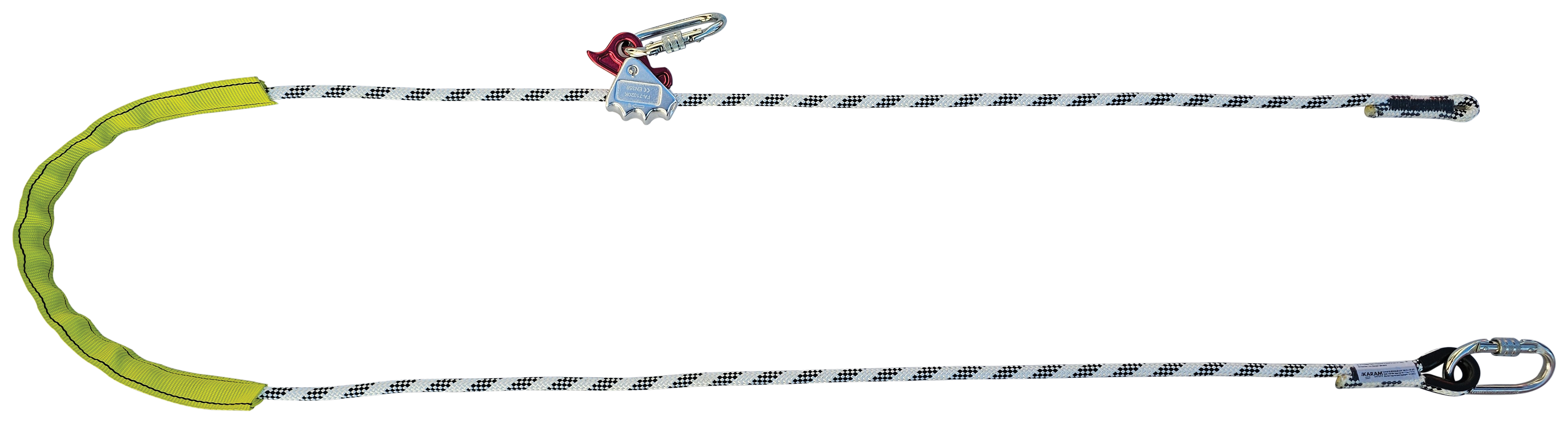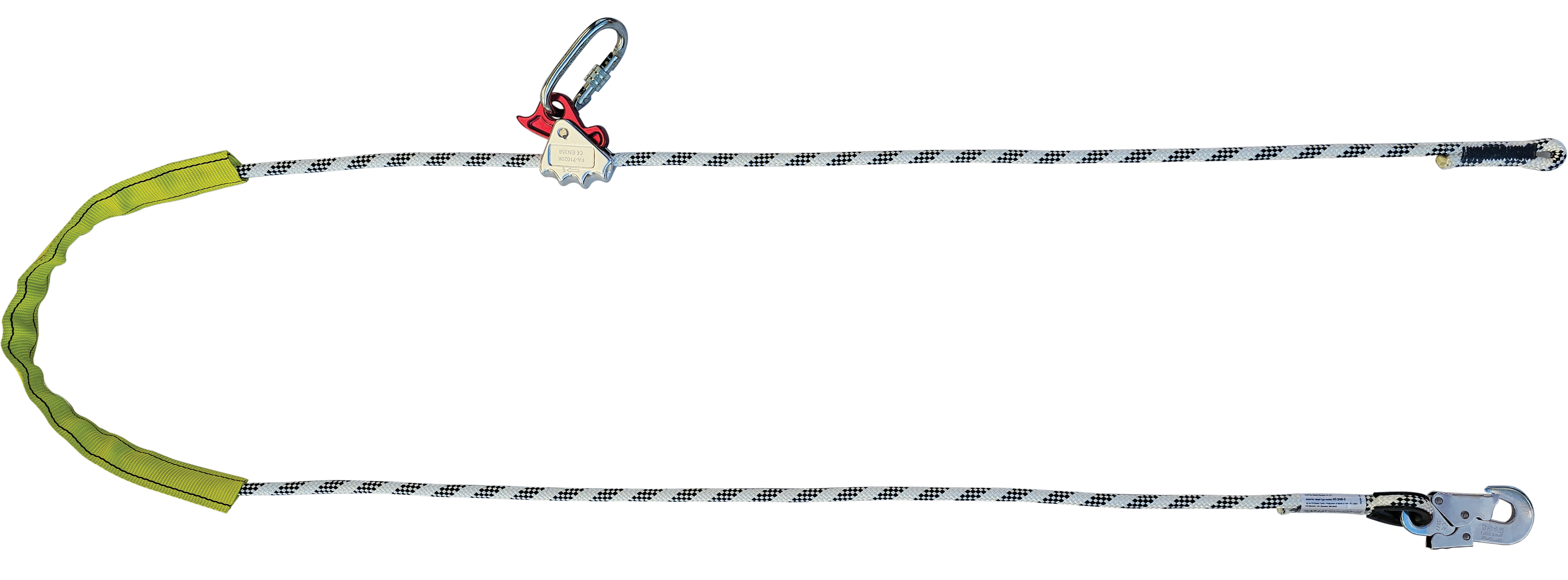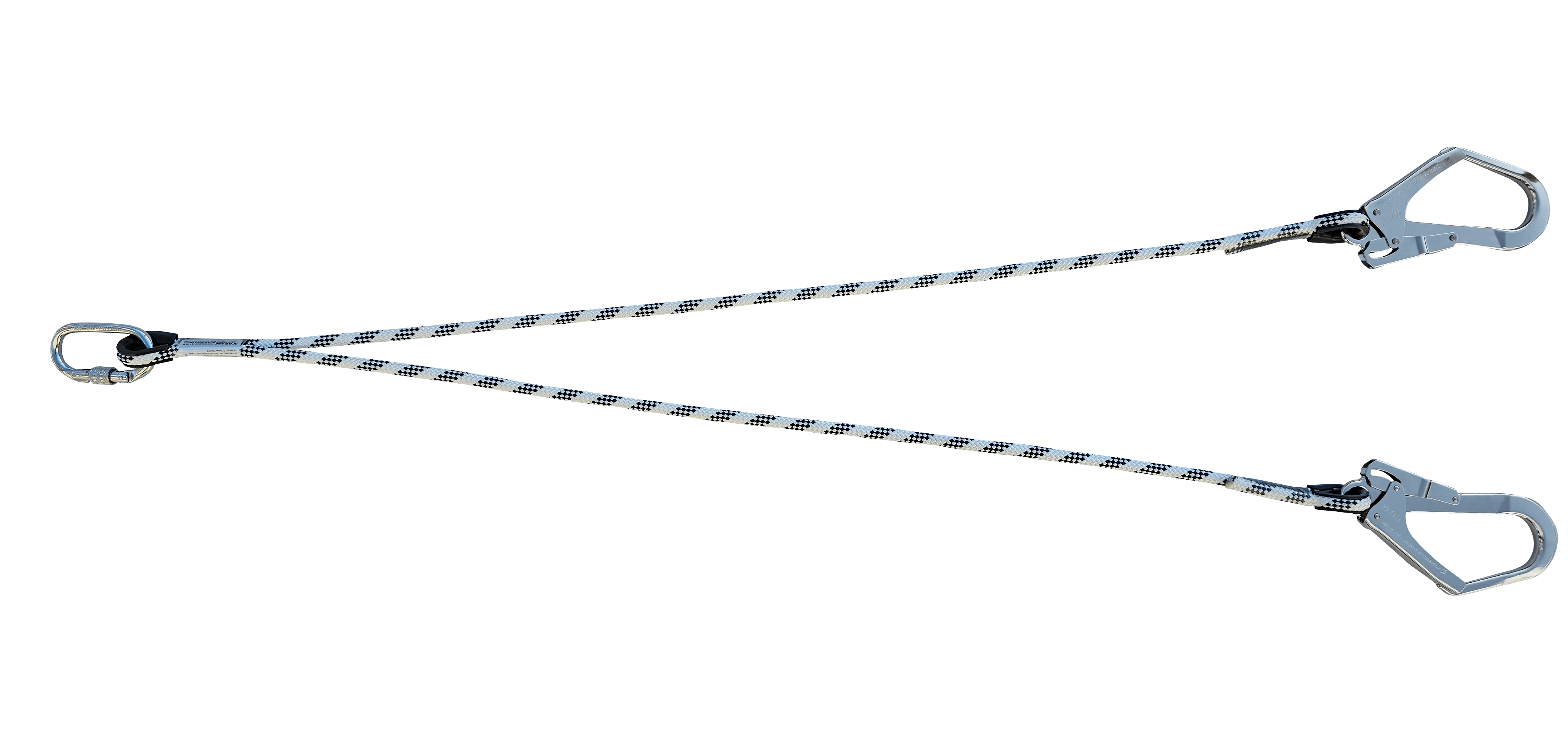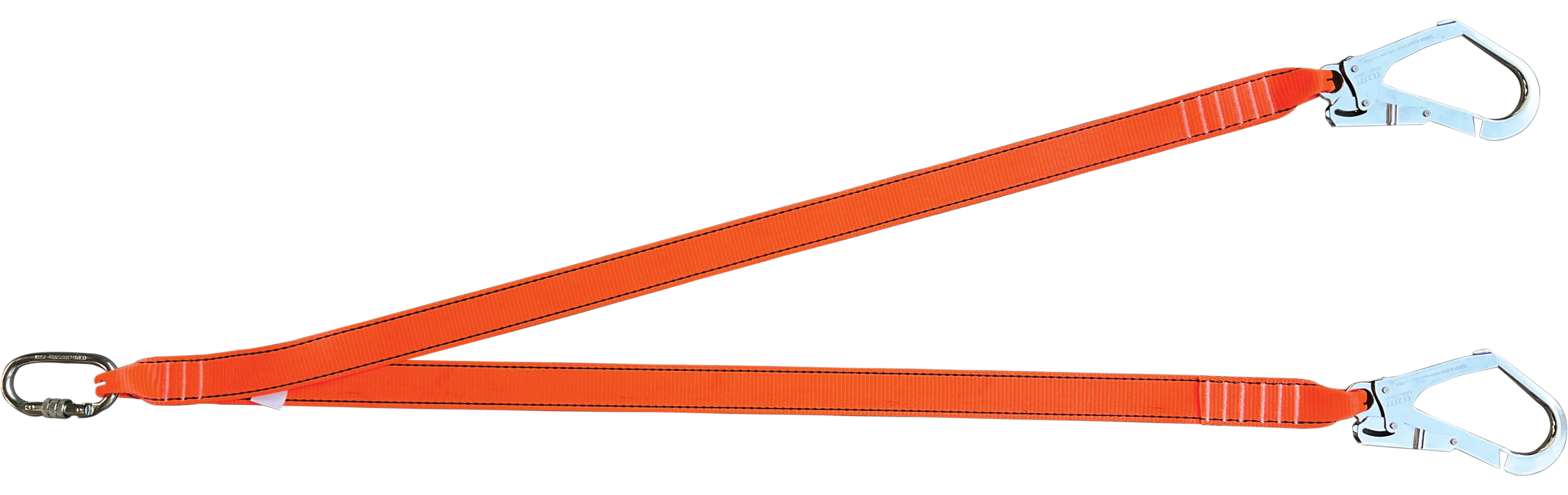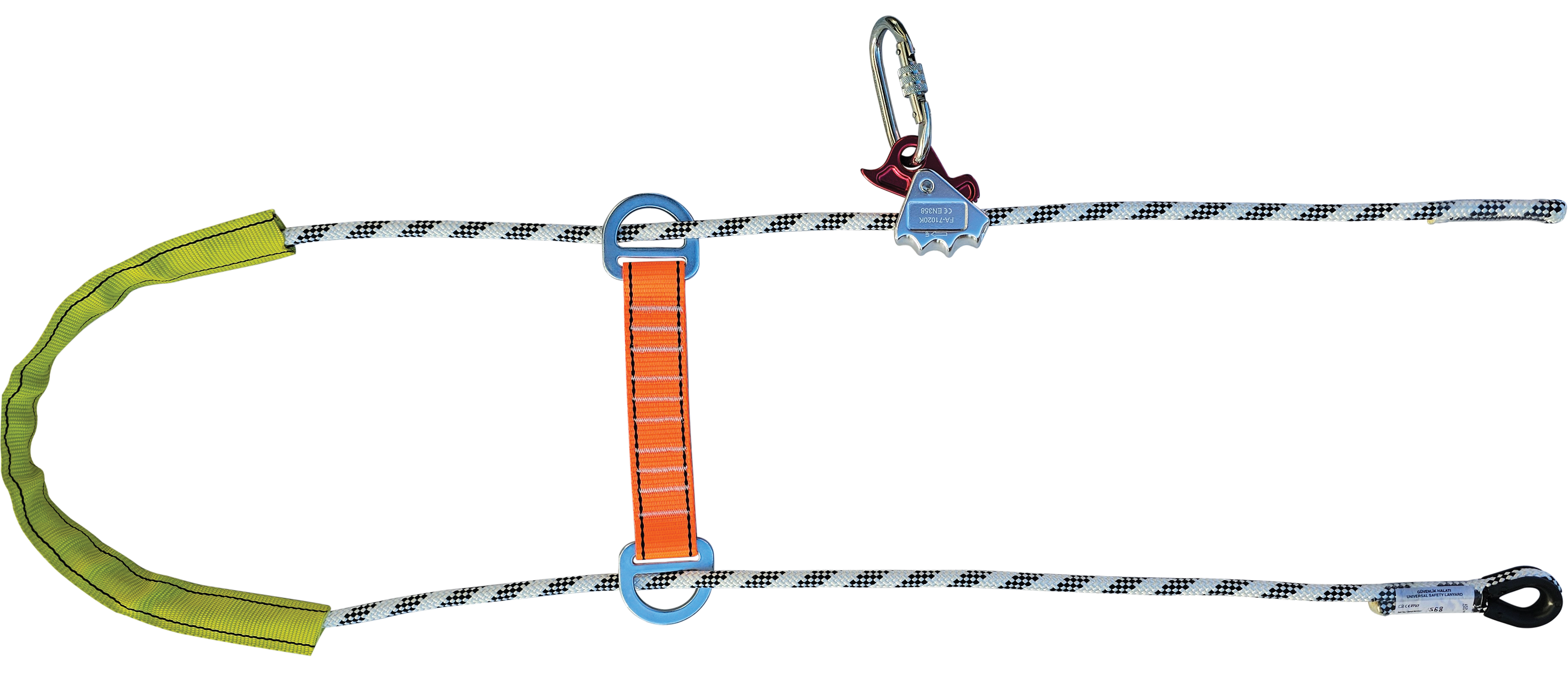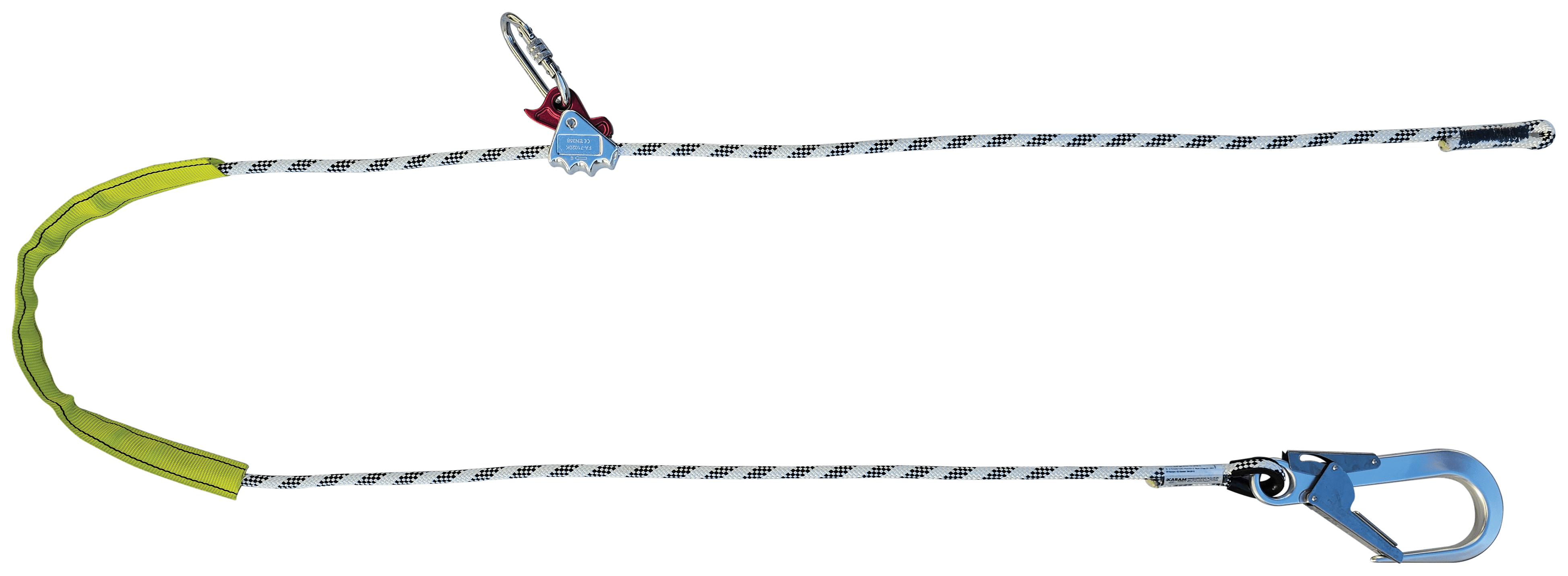

The Turkish equivalent of the word lanyard means "neck strap". It is a cord-like device fastened around the neck, wrist or shoulder. It is in the form of a strap and also serves as a rope. Lanyards are thick ropes with one end connected to a deceleration device and the other end connected to safety lines. They are widely used but, unfortunately, not everyone uses them correctly. The safety lines must be very secure and the rope must be properly seated.
Lanyards should be used according to the arm length of the worker. However, taking into account that the required length may change, adjustable types of lanyard can also be used. If a single-leg lanyard is used, freedom of movement cannot be ensured. However, if a double-leg lanyard is used, you can move more freely.
What Is the Purpose of Lanyards?
Lanyards are used to help arrest falls. However, using lanyards alone is of no use. Shock absorbers must always be used together with lanyards.
NOTE:
Shock Absorber: In the event of a sudden fall, shock absorbers allow the fall speed to be reduced gradually so that the falling person is not harmed by the speed of the fall. In this way, possible damage resulting from the fall is prevented or minimised. If we think of lanyards as a rope, shock absorbers are attached to normal or elastic ropes. In this way, the aim is to minimise damage. The combined shock-absorbing device and lanyard are generally used by attaching them to parachute type safety harnesses. Some shock-absorbing devices can extend up to 2 metres.
Using lanyards together with shock-absorbing devices helps to minimise the harm caused by unforeseen falls, loss of balance or being pushed. Shock absorbers open step by step at the moment of the fall and ensure that the shock the fall creates for the falling person, that is, the harm that would occur, is minimised. This step-by-step opening makes the person fall not quickly but more slowly. For this reason, the falling person gets through the state of shock.
What Are the Areas of Use of Lanyards?
The areas of use of lanyards include climbing athletes, construction workers, those who clean the exteriors of buildings, those who carry out roof repairs and, in some cases, firefighters; these sectors are seen to be the areas in which lanyards are used. In free fall, the distance for lanyards must be at least 6 metres. Attention must be paid to this point.
How Many Types of Lanyard Are There? What Are the Types?
Lanyards are divided into two groups: single-leg (single-arm) and double-leg (twin-arm) lanyards. However, they are also divided into five types according to their features.
- Single-Leg (Single-Arm) Lanyards
- Single-Leg (Single-Arm) Lanyards with Shock Absorber
- Double-Leg (Twin-Arm) Lanyards
- Double-Leg (Twin-Arm) Lanyards with Shock Absorber
- Adjustable Lanyards
Single-Leg Lanyards: They are used for limited extension and movement.
Single-Leg Lanyards with Shock Absorber: In addition to the features of single-leg lanyards, they also have a fall-arrest (deceleration) feature.
Double-Leg Lanyards: They are used for climbing and movement. They provide more flexible movement than single-leg lanyards.
Double-Leg Lanyards with Shock Absorber: In addition to the features of double-leg lanyards, they also have a fall-arrest (deceleration) feature.
Adjustable Lanyards: They are used for comfortable movement, position adjustment and creating a lifeline. They are manufactured in accordance with specific standards.
What Should Be Considered When Using Lanyards?
- When it is purchased, the protective parts of the rope (safety locks) should be removed and its strength should be tested.
- If you are going to use a lanyard for climbing, double-leg lanyards should be used.
- If you are using a double-leg lanyard, you should attach it at two separate points.
- There should be no fraying, wear or breakage in the rope (cord).
- If the area you are in and working in is large, adjustable lanyards should be used.
- Carabiners (safety locks) should be checked; during use, the locks should seat fully in place and must not be faulty.
What Are the Incorrect Uses of Lanyards?
- Work should only be carried out once the safety locks are fully closed.
- When you want to climb, the ropes should be at shoulder level, not at waist level.
- Frayed or worn lanyards should not be used.
- Do not attach the lanyard (rope) connections to the hooks (D).