

In This Article
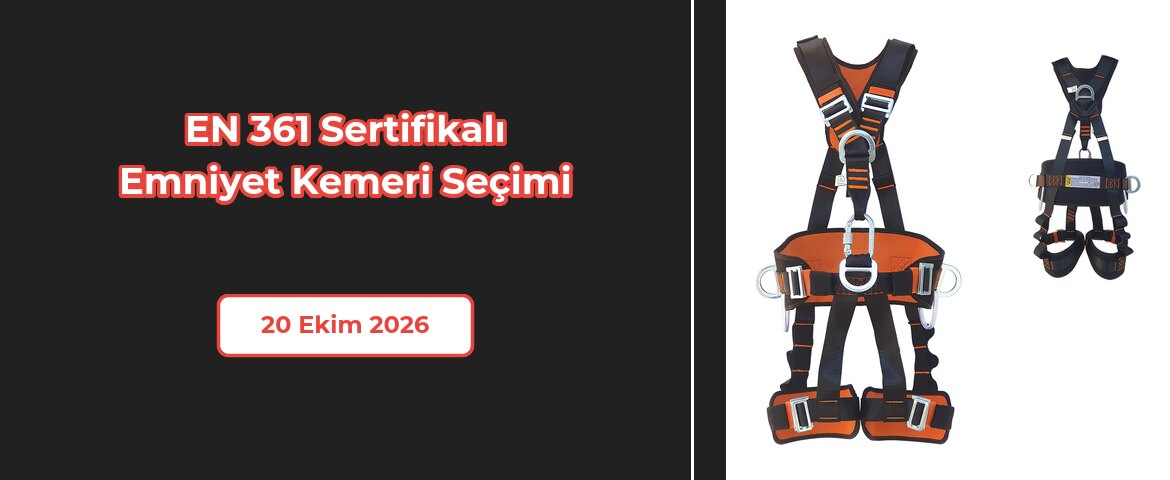
Full body harness technical specifications are designed for mountaineers, parachutists and people working at high altitudes. Its field of use is clearly one involving height. For this reason, full body harnesses are an ideal safety measure for work and activities at height. Unlike other safety belts, it has a structure that wraps around the body. There are straps around the arms, shoulders, waist and thighs. In addition, there are many types of full body harness. These are models that provide shoulder support, waist support and full protective support. In terms of technical specifications, the full body harness has a wide range of features.
What Are the Technical Specifications of a Full Body Harness?
The full body harness technical specifications can be listed as follows:
- Full body harnesses should be easy to put on and take off.
- They should be ergonomically designed and should not restrict movement or interfere with the body.
- Maximum safety and a long service life should be ensured by using high-quality materials.
- They should be designed so that blood circulation is not cut off when the person is suspended in the harness.
- They should comply with EN specifications.
- They should be adjustable to each person's body.
- Hooks and buckles are the metal parts of the harness and, for safety, should be made of stainless steel or aluminium alloy.
- There should be a load-bearing "D" ring at the back of the waist belt.
What Is a Full Body Harness Used For?
In terms of full body harness technical specifications, the INS-24 and INS-32 type harnesses are the full body harnesses best suited for use on quays. While allowing easy and safe work on the quay, these parachute-style harnesses are also suitable for use on building sites and in construction. Working on a quay is a hazardous area. Even a fall of a few metres from a scaffold can cause serious injury, and a full body harness should be preferred in every situation where scaffolding is required.
In terms of full body harness technical specifications, people using the harness should check it before each use. However, a small check alone may not be enough to guarantee safety. Regular inspection of full body harnesses is important for healthy working and a high level of safety. According to OHS T Article 529, periodic inspections should be carried out every 3 months by trained/expert personnel in the discipline. If faults and defects are detected during the inspection, the harness must not be used again until they are rectified. In terms of full body harness technical specifications it is a flawless product.
Let our team recommend the best equipment for your needs and quote you quickly.