In This Article
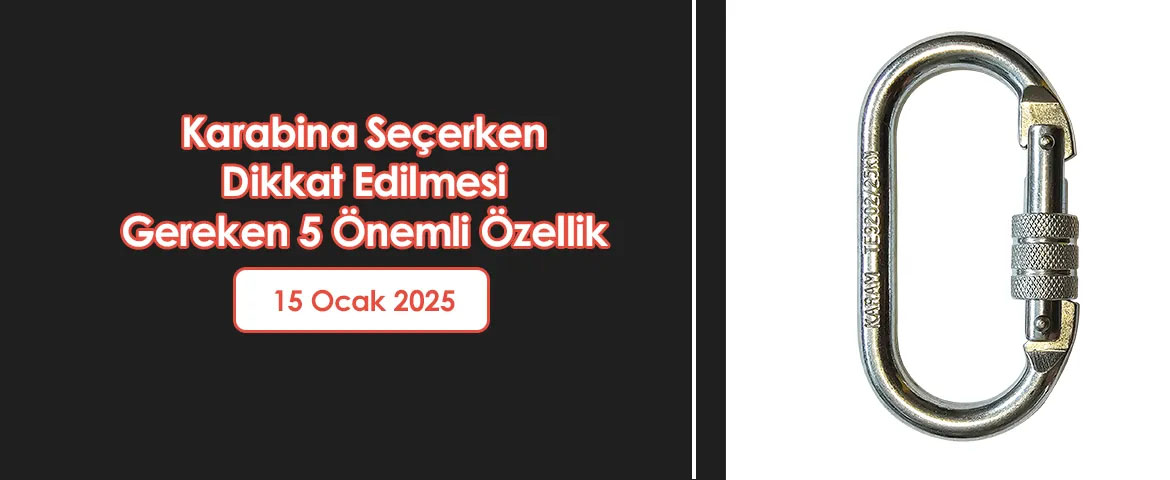
When it comes to the 5 important features to consider when choosing a carabiner, various criteria come to the fore. Carabiners are an indispensable part of both outdoor activities and safety. However, what you should pay attention to when choosing a carabiner is in fact closely related to the purpose it will serve. Carabiners can be used not only in mountain climbing but also for camping, mountain biking, safety equipment or even keeping your keys organised. So, how do you choose the right carabiner? Here are the 5 important features to consider when choosing a carabiner!
Carabiner Material and Durability
Material quality and durability are among the 5 important features to consider when choosing a carabiner. Carabiners are manufactured from different materials, and each of these materials offers different performance under certain conditions. Aluminium alloys combine lightness and durability. They are frequently preferred for activities such as climbing, mountaineering and camping.
Stainless steel, on the other hand, has a denser and more durable structure. For this reason, it is preferred in industrial applications and harsh conditions. Both materials can be specially treated to make them resistant to scratches, wear and corrosion. Environmental factors are of great importance in the choice of material. While aluminium is known for its versatility, it requires protective coatings when used in corrosive environments such as salt water.
Use appropriate to the structure of the material significantly affects both safety and performance. For those looking for a light but durable material, aluminium alloys stand out. Those looking for an alternative suited to more intensive use and harsh conditions turn to models made of stainless steel. The material of the carabiner should be determined according to the user's needs.
Locking Mechanism and Safety
In carabiners, the locking mechanism forms the basis of safety. Different locking systems respond to various user needs. The screw lock is closed manually and is ideal especially for use in fixed positions. Automatic locking mechanisms, on the other hand, offer a fast and practical experience, which is why they are preferred by professional mountaineers and industrial users. The more secure the locking system, the better the carabiner's performance. Here are the key details about the locking mechanism;
- The design and durability of the locking mechanism are meticulously checked during production
- Modern locking systems have been developed so that they can be easily opened and closed with one hand
- These designs provide a secure connection even while on the move
- Two-stage locking systems minimise the risk of accidental opening
The sensitive mechanism of the lock is designed to withstand both environmental factors and friction. Each locking system offers different advantages and limitations. Screw models stand out for long-term attachments, while automatic locks are important in situations requiring quick action. New-generation systems such as push-lock attract attention with their ease of use.
Carabiner Size and Load-Bearing Capacity
Carabiners vary according to their size and load-bearing capacity. Different sizes are optimised for various activities and load requirements. Small carabiners offer the advantage of lightness and are generally preferred for securing accessories. Larger models, on the other hand, stand out in situations requiring high durability. Among the 5 important features to consider when choosing a carabiner, load-bearing capacity has always held an important place.
The load-bearing capacity of a carabiner is directly related to the material and design used in its manufacture. Capacity is expressed in kN (kilonewtons) and is tested in three ways: major axis, cross-loading and gate load. A carabiner with a high kN value can withstand heavier loads. However, use appropriate to the capacity is important. Incorrect use puts unnecessary stress on the weak points of the carabiner and can reduce its performance. Larger carabiners are ideal for multiple rope attachments or wider connections. Small carabiners, on the other hand, offer ease of use in confined spaces.
Carabiner Design and Ease of Use
Carabiners are among the indispensable pieces of equipment in outdoor activities, mountain climbing and professional rescue operations. The design and ease of use of this important tool significantly affect the user experience. Ergonomic details are always important among the 5 important features to consider when choosing a carabiner, because ergonomic details are among the fundamental elements of an effective carabiner design.
Choosing lightweight materials aims to reduce the user's load while maintaining durability. Materials such as aluminium and titanium frequently stand out. The locking mechanism is of critical importance in terms of both safety and practicality. Screw, automatic and wire gate models cater to different needs. Models that can be easily operated with one hand during climbing are particularly preferred.
In the design process, aesthetics are taken into account as much as functionality. Colouring and surface coatings appropriate to the area of use support both the visual and physical durability of the equipment. Anti-corrosion coatings extend the life of the carabiner. Compact sizes designed for easy carrying take up little space in a backpack. The attention paid to detail in the design of carabiners provides the user with comfort and confidence.
Environmental Factors and the Durability of the Carabiner
Carabiners used in outdoor activities are designed to be resistant to different environmental conditions. Factors such as temperature differences, humidity, salt water and physical impacts affect the performance of the equipment. For this reason, special materials and techniques are preferred in their manufacture. In evaluating the 5 important features to consider when choosing a carabiner, metal alloys always gain importance.
The metal alloys that make up carabiners are generally resistant to rust. Aluminium and steel are the most commonly used materials in this field. While aluminium models stand out for their light structure, steel carabiners can withstand high loads. The use of a special anti-corrosion material in their coatings minimises the effects of elements such as salt water and humidity.
Climatic conditions play a critical role in the durability of equipment. In carabiner design, materials that resist physical changes such as expansion or contraction in extremely hot or cold environments are preferred. In addition, surface designs resistant to factors that can cause mechanical wear, such as strong winds and sandstorms, are applied.
Let our team recommend the best equipment for your needs and quote you quickly.