
In This Article
Developed to protect the lives of personnel working at height, the system that will save the lives of personnel in the event of any fall is the horizontal lifelines system. This system must be manufactured in compliance with the EN 795:2012 and CEN TS 16415:2013 standards.
Design and Installation of Horizontal Lifelines
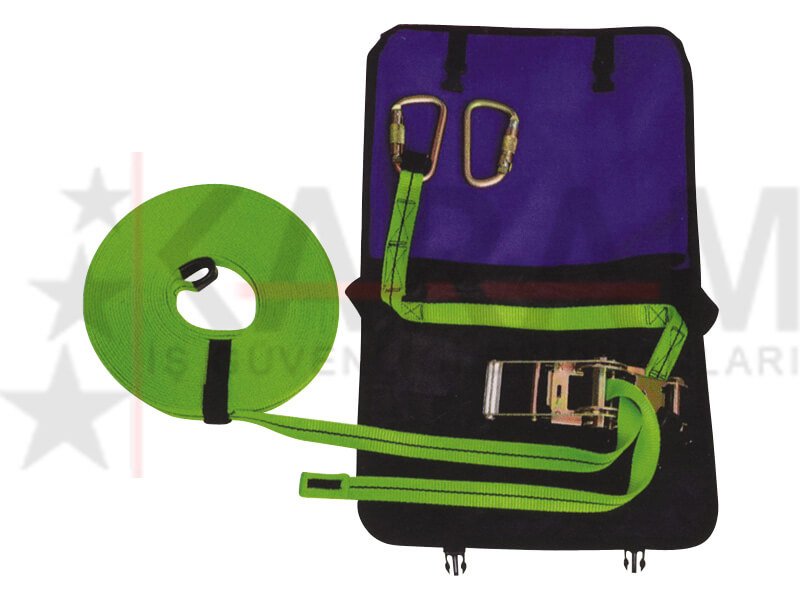
It is designed to include a main connection bracket (MCB) made of SS316 grade stainless steel, intermediate support bracket points, a rope grab, a tensioning device, a shuttle (traveller), a shock absorber and a stainless steel rope. If it is not designed correctly, it cannot perform its functions. Its design must be complete and must meet all expectations. When horizontal lifelines are installed, the rope made of stainless steel is tensioned by means of the tensioning device. It is joined with support brackets at intervals of 10 – 12 metres. The shuttle connects the personnel to the horizontal lifelines. During connection, a safety harness together with a retractable fall arrester or a lanyard is used. Personnel who will work at height wear a parachute type safety harness. Because it includes a mobile rope grab, the personnel's hands and feet work freely. The most important point to consider when installing horizontal lifelines is the type of roof on which they will be installed. Different anchorage connection systems are selected for types such as membrane roofs, trapezoidal roofs, concrete roofs, steel roofs and sandwich panel roofs. Fixed to the roof, horizontal lifelines prevent personnel from being harmed in the event of a fall thanks to the shock absorbers they contain.
Areas of Use of Horizontal Lifelines
Crane runways, curved surfaces, machine tops, filling facilities, bridges, the masonry stages of construction and roof types without guardrails are places where horizontal lifelines are frequently used. Horizontal lifelines can also be used for all kinds of cleaning, maintenance and repair work to be carried out at height.
Advantages of Horizontal Lifelines
Horizontal lifelines do not hinder the worker from doing their job. Because they consist of a flexible line, they are very comfortable to use. With horizontal lifelines that can be fixed to the roof, the lives of personnel are not put at risk. Because they include a shock absorber system, the effect of a sudden impact is dampened in the event of any fall. They provide continuous and permanent safety.
Let our team recommend the best equipment for your needs and quote you quickly.