
In This Article
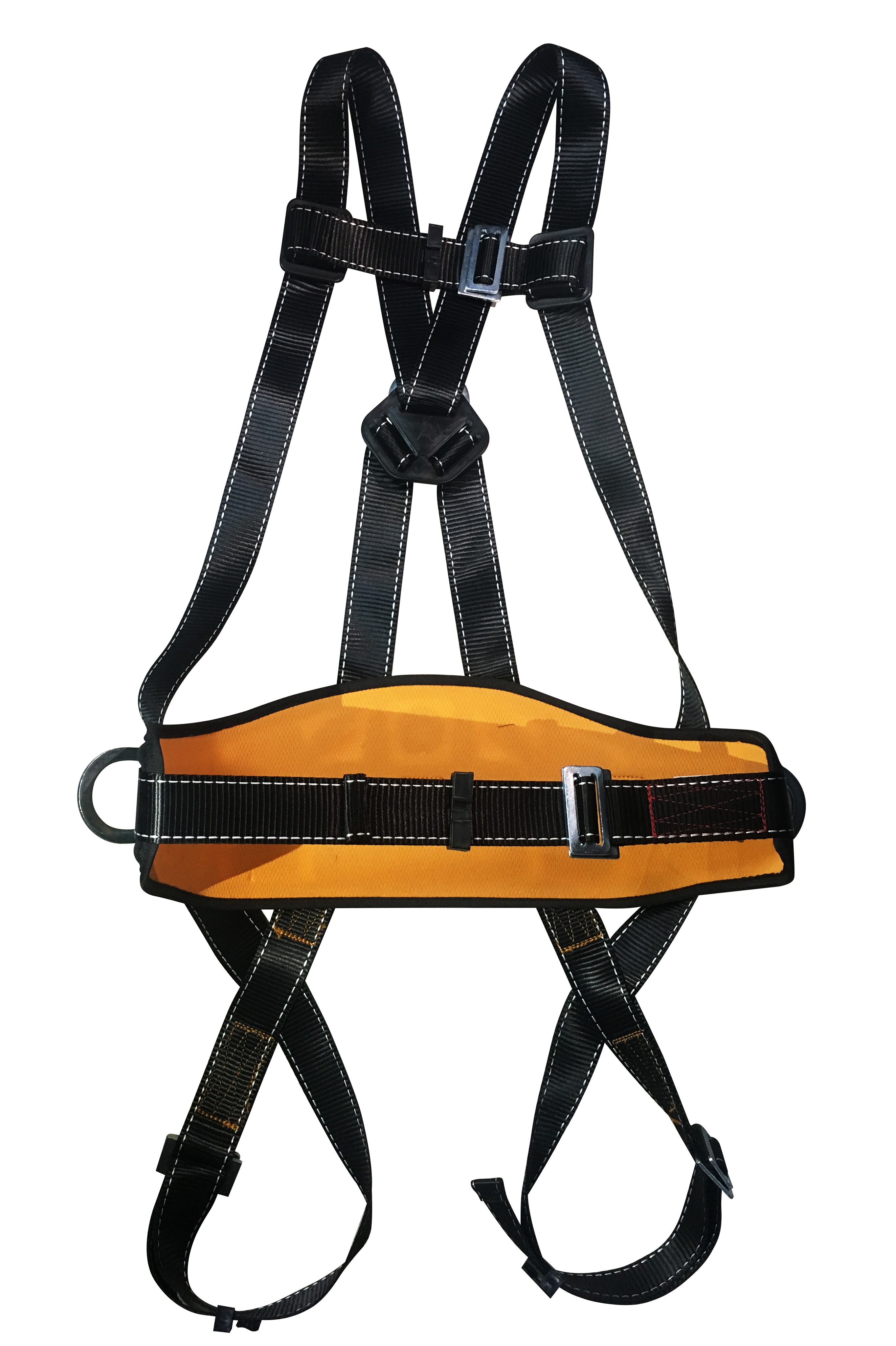
A full body (parachute type) safety harness is a piece of safety equipment consisting of belts and ropes, used to protect people working in places with a risk of falling from falls and injury. Ensuring occupational safety in work environments is extremely important, and a variety of equipment is used to achieve it. The most important characteristic of this equipment is that it is designed to provide safety. Parachute-type safety harness designs are models created precisely to provide this safety in the best possible way.
These safety harnesses allow people to descend safely in emergency evacuations from tall buildings or aircraft. Harnesses of this kind are vital for those working on high-rise buildings, military personnel, firefighting teams and similar situations.
Parachute-Type Safety Harness Standard
Manufacturing parachute-type safety harnesses in compliance with these standards is vital for ensuring user safety. These standards ensure that manufacturers test and certify their products and offer reliable products to consumers.
Fall-arrest parachute-type safety harnesses used against falls from height are subject to European standards. The first of these is the standard known as CE EN 358. This standard requires belts used as work positioning equipment to have specified characteristics. In these belts, one system is connected to another system, and positioning is achieved with various belts and ropes.
The CE EN 361 standard, on the other hand, defines harness assemblies as personal protective equipment against falls from height. These standards call for body-holding devices that distribute the impact of a fall and reduce its consequences. In this parachute-type safety harness, the full body harness consists of straps, buckles and other components. This equipment is worn on the body and adjusted to protect the worker during and after a fall.
Equipment complying with the CE EN 813 standard consists of protective products designed in much greater detail. This standard is designed to provide complete personal protective equipment for work positioning and protection against falls from height. Equipment compliant with this standard can be combined with EN 358 and EN 361. In this way, a thigh strap with a work positioning belt and a safety harness with a seat attachment meet these standards.
Parachute-Type Safety Harness Prices
Parachute-type safety harnesses are available at different price points. The materials and details used in making the harnesses play a very important role in these different price options. The steel components, fabrics and extra attachments used on the product determine the prices of this equipment. In addition, design features intended to ensure the user's safety and comfort also affect the price. Wide straps and an adjustable suspension with a lumbar pad also have a significant impact on the price of these harnesses. By examining models that provide complete safety and purchasing these products at suitable prices, you can work safely in risky areas.
Use of the Parachute-Type Safety Harness
Known as a safety product designed to keep the user upright in the event of a fall from height, the parachute-type safety harness — when fitted correctly — reduces the likelihood of serious injury by distributing the energy generated during free fall evenly across the wearer's body. In this equipment, the harness starts at the shoulders and covers the arms, torso, back, waist and legs.
Safety is always a priority in our daily lives. Today, with advancing technology, safety belts have also become safer. One of these innovations is the parachute-type safety harness. The parachute-type safety harness takes its name from the attachment system used in parachutes. The main feature that distinguishes this harness from others is a special mechanism capable of absorbing the high energy that may occur during accidents. It provides more safety than conventional safety belts because it reduces the impact on the body during sudden stops.
This safety harness is used in the construction sector and other industrial environments. The parachute-type safety harness is designed to provide maximum comfort to the user. With its adjustable straps and padded sections, it offers comfort even during extended use.
Parts of a Parachute-Type Safety Harness
Parachute-type safety harnesses are vitally important equipment generally used during air sports or high-altitude activities. The parts that make up this harness come together to ensure the user's safety. The parts of a parachute-type safety harness can be listed as follows:
- The main belt holds the user's body and balances the distributed load. It is usually a durable and adjustable strap.
- The locking buckle, which provides the connection to the main belt, locks securely and prevents the user from falling.
- The chest strap is used to secure the chest and keep the user's posture correct.
- The straps worn over the shoulders increase the user's balance and comfort while keeping the harness in place.
- The straps placed on the legs secure the user's body and distribute the force in the event of a fall.
- Carabiners are durable and reliable metal rings that connect the user, via the safety harness, to a fixed point.
- Adjustment points can be set to fit the user's body. This allows the safety harness to be made suitable for every user.
The parts of a parachute-type safety harness are extremely important in terms of safety. Manufacturing these parts from high-quality, reliable materials and maintaining them regularly is vital to maximising the user's safety.
How to Put On a Parachute-Type Safety Harness?
For the parachute-type safety harness used to ensure safety to deliver the desired performance, it must be worn and used correctly. The shoulder section of this equipment should be put on first. The section that has been put on should be fastened firmly and adjusted to fit the body. After the shoulder section is on, the part between the shoulder and the leg should be secured with the connection points. This should be done on both sides of the body. The chest section should then be put on and joined to the shoulders with the help of the buckle. Finally, check that all connection points are fully fastened. When wearing your harness, make sure it is comfortable and does not restrict your movements. By following these steps, you can use the parachute-type safety harness safely.
Service Life of a Parachute-Type Safety Harness
The parachute-type safety harness is a critically important piece of equipment for ensuring safety. Harnesses of this type are designed for use in high-risk activities and emergencies. However, the service life of this equipment is important, because the material may wear over time and lose its functionality.
A parachute-type safety harness generally has a service life specified by the manufacturer. This service life may vary depending on factors such as the durability of the materials that make up the harness, their abrasion resistance and the frequency of use. A harness that has exceeded its service life may pose a safety risk and endanger its user.
Users should regularly check the service life of their safety harness. If there are any signs of abrasion, wear or damage, the harness must be replaced immediately. It is also important to have the safety harness professionally inspected at regular intervals to ensure safety.
What Is a Parachute-Type Safety Harness Used For?
Parachute-type safety harnesses are very important pieces of equipment generally used in air sports and high-altitude activities. The design of this harness differs from ordinary safety belts because in the event of a fall it distributes the resulting force over the body and holds the user securely. In this way, it reduces the risk of injury during sudden falls and increases safety. This plays a critical role in protecting users' lives, especially in risky sports such as mountaineering and parachuting, and in areas such as working at height.
A safety harness is indispensable equipment for minimising harm and ensuring safety in emergencies.
Parachute-Type Safety Harness Prices and Types
The prices of parachute-type safety harnesses vary according to their type, quality and manufacturer brand. Full body harnesses may be more expensive because they require more material and more complex designs. Half body harnesses, however, may be more affordable and may be better suited to users for sporting purposes.
Full body harnesses are designed to protect the user's entire body. They have a structure covering the shoulders, chest and legs and are generally used in high-risk industrial work. Half body harnesses, which are lighter and less comprehensive than full body harnesses, are generally preferred in sporting activities such as mountaineering and climbing. They cover the shoulders and chest but not the legs.
Features of the Parachute-Type Safety Harness
The parachute-type safety harness takes its name from parachute use and is designed as a type of safety harness that protects the user against the risk of falling. Unlike conventional safety belts, parachute-type safety harnesses generally provide full body protection and are specially designed to prevent falls. For this reason, they are frequently preferred in high-risk work and in activities such as mountaineering and climbing. Some of the features of these harnesses can be listed as follows:
- Durability and quality
- High load capacity
- Ease of adjustment
- Compliance with high safety standards
- They may include features such as extra grip points, quick connection systems, height-determination devices and integrated rescue equipment for use in emergencies.
- Comfort and mobility
- Training and awareness
The parachute-type safety harness is critical equipment for protecting human life in emergency evacuations. The fact that they are designed for exiting a building or aircraft quickly and safely makes these harnesses valuable in terms of occupational safety. However, it is also important that users receive proper training and that regular maintenance is carried out. In this way, parachute-type safety harnesses can be used in the best way to ensure safety in a possible emergency.
What Is a Parachute-Type Safety Harness and How Does It Work?
The parachute-type safety harness takes its name from the harness system worn with parachutes. Unlike conventional safety belts, it holds the body more effectively during a sudden stop, reducing the risk of injury. The working principle is quite simple: in a fall, the harness distributes the resulting force over the shoulders, chest, waist and legs.
Thanks to safety belts, body movement is minimised and the risk of possible injury is reduced. In addition, thanks to its wide straps, it withstands impacts better and distributes the energy, preventing the damage from spreading. The parachute-type safety belt has become an important part of work-at-height safety. This equipment, which increases user safety, is regarded by employers and users as an important reason for preference.
Advantages and Applications of the Parachute-Type Safety Harness
Parachute-type safety harnesses help reduce the risk of falling from height while working. Fastened to the worker's body, these harnesses support the body in the event of a fall and prevent serious injuries. Employees working in an environment where occupational safety is ensured feel safer. This reduces employees' stress levels and consequently increases work efficiency.
Using these safety harnesses offers many advantages. In an emergency, exiting a building or aircraft quickly is vital. Parachute-type safety harnesses protect human life by enabling this rapid evacuation. These harnesses usually have a simple design and can be easily put on and used by users. They can be used in many different fields such as occupational safety, military operations and firefighting.
Parachute-type safety harnesses can generally be adjusted to fit different body types. This allows every worker to work comfortably and safely. Made from high-quality materials, parachute-type safety harnesses are durable for long-term use. This reduces costs and offers a long-term solution in workplaces. Most parachute-type safety harnesses are lightweight and portable. This allows workers to carry the harnesses easily and use them at different work sites. Some of their areas of use are listed below:
- Construction and building industry
- Mountaineering and rock climbing
- Maritime and offshore industry
- Tree felling and maintenance work
- Energy and telecommunications sector
Parachute-type safety harnesses are an important tool for ensuring the safety of employees in high-risk work. The advantages and various applications of these harnesses help raise safety standards in workplaces and protect employees' health.
Types and Models of Parachute-Type Safety Harnesses
Parachute-type safety harnesses are known for being comfortable and practical as well as ensuring your safety. These harnesses are generally used in risky environments such as work at height. Height-adjustable harnesses can adapt to different heights and needs, while high-performance models are generally intended for professional use. Harnesses designed for emergency evacuation provide fast and reliable evacuation. Each model has different features to meet specific needs. Choosing the right model is important for your safety.
The full body safety harness is designed to wrap the user's torso completely to prevent possible injuries during a fall. When this harness is used, it reduces the risk of injury by distributing the force exerted on the body in the event of a fall. It also usually comes with side attachment points, which gives the user the flexibility to move into different working positions.
The half safety belt is a piece of safety equipment that wraps around the waist and helps secure the user's body during a fall. It is generally preferred for fixed work areas and provides less support than full body safety harnesses. However, thanks to the securing at the waist, it protects the user during a fall.
Parachute-type safety harnesses are special safety equipment used particularly in work at height. These harnesses take their name from the design of parachutes and are designed to protect the user's body in the best way at the moment of a fall. Because they are generally used in harsh conditions, they are extremely durable and reliable.
The shoulder-supported safety harness provides additional support in the shoulder area, allowing the user to experience greater comfort and a stronger sense of security. It reduces fatigue, especially during long periods of work, and reduces the risk of injury to the shoulders.
What Should Be Considered When Choosing a Parachute-Type Safety Harness?
Parachute-type safety harnesses are equipment that air sports enthusiasts use to ensure their safety to the highest degree. There are some important points to consider when choosing these harnesses. First, attention should be paid to the strength and durability of the harness. A harness made of high-quality materials provides protection in possible accidents. It is also important that the harness is the right size and comfortable. A tight or uncomfortable harness can distract you during the sport. In addition, it is important that the safety harness can be used together with compatible equipment. By paying attention to these factors, you can enjoy a safe air sports experience.
Use and Installation of the Parachute-Type Safety Harness
Parachute-type safety harnesses take their name from the way parachutes are used. Although these harnesses have a structure similar to standard safety belts, they are stronger and more durable. They are generally designed for use in work at height. Unlike ordinary safety belts, parachute-type safety harnesses are generally wrapped tightly around the body in a loop and locked.
First of all, you must make sure that the parachute-type safety harness has been installed correctly. Before fitting the harness, carefully review the installation guide and follow the instructions step by step. Incorrect installation can reduce the effectiveness of the harness and put your safety at risk.
Safety Principles for Using a Parachute-Type Safety Harness
Using parachute-type safety harnesses correctly is of vital importance. First, the harnesses must be fitted correctly. It must be ensured that the harnesses fit tightly and that there is no slack. The harnesses should be checked regularly for wear. If any damage or weakness is detected, the harnesses must be replaced immediately. Finally, care should be taken when fitting the safety harness, and accidental opening of the harnesses should be prevented. Following these principles ensures that safety harnesses are used effectively and safely.
Frequently Asked Questions About Parachute-Type Safety Harnesses
How is a parachute-type safety harness put on and adjusted?
Parachute-type safety harnesses are put on by wrapping them around the body, adjusting and locking them. Close attention should be paid to the connection points.
How do parachute-type safety harnesses differ in different working environments?
Parachute-type safety harnesses may have different features depending on the working environment. Their features may vary according to the area in which they will be used. Harnesses with different features are used on land, at sea and in the air.
What should I consider when choosing a parachute-type safety harness?
When selecting a parachute-type safety harness, it is important to consider factors such as durability, compliance with conformity standards and comfort. Paying attention to these when choosing a safety harness saves lives.
How is a parachute-type safety harness cleaned and maintained?
For cleaning, it can be hand-washed with detergent in accordance with the manufacturer's instructions; it should be maintained regularly and inspected before and after use.
In which cases should a parachute-type safety harness be replaced?
If any damage, wear or deformation is found during inspection, parachute-type safety harnesses must be replaced. Damaged safety harnesses must never be used.
What safety precautions should I observe when using a parachute-type safety harness?
You must make sure the harness is fitted correctly, and damaged or worn-out harnesses must not be used.
Is training or certification required for the parachute-type safety harness?
Generally, no special training or certification is required to use a parachute-type safety harness. It is sufficient for the person who will use it to be fully familiar with the instructions for use.
In which industries are parachute-type safety harnesses commonly used?
Parachute-type safety harnesses are used in many industries, such as construction, mountaineering, maritime and industrial work.
What is the load capacity of a parachute-type safety harness?
The load capacity is usually specified by the manufacturer and may vary between models. The person who will use the equipment should do so only if they fall within this capacity information.
Are there parachute-type safety harnesses suitable for different body types?
Yes, parachute-type safety harnesses suitable for different body types are available.
What sources can I consult for more information about parachute-type safety harnesses?
Manufacturers' websites, guidelines from safety organisations and industrial safety training resources provide more information.
The parachute-type safety harness is among the most essential pieces of safety equipment, so these products are always in demand.
Let our team recommend the best equipment for your needs and quote you quickly.