

In This Article
The safety harness came into use with the laws on the prevention of accidents in factories, which came into force in 1887.
In our country, the safety harness came into force in 1971; the article of the Occupational Health and Safety Regulation, issued under Article 74 of Labour Law No. 1475 and in force since 1973, stated that safety harnesses are to be used by workers in order to take the necessary safety precautions for persons engaged in maintenance, repair, renovation and alteration work on buildings, structures and similar high places more than 4 metres high, where it is not possible to work in dangerous places protected by guardrails.
Safety Harnesses
There are various types of safety harnesses made in different models for people engaged in hazardous work.
Depending on the country, safety harnesses have to follow a certain manufacturing style and pass certain required tests. When safety harnesses are made, certain features must be taken into account. For example, they must increase the chance of survival of a worker falling from a construction site by 65% and make it easier for workers to do their jobs.
Places Where Safety Harnesses Are Used
1. In construction work, demolition work and assembly work
2. They are also used on poles, towers and similar high and steep places, for climbing and for tasks such as window cleaning.
3. They can be used in confined spaces such as tanks and boilers, because places like these can be dangerous.
General Purpose Safety Harnesses
General purpose safety harnesses catch the person in an event such as the user losing balance or at the moment of a fall, and limit the distance fallen.
The restraint rope consists of metal parts. Shoulder and leg straps are fitted to keep this type of safety harness in place. Waist-type safety belts are used by attaching them at the waist when shoulder and leg straps are not used. When shoulder and leg straps are used, the harness can be attached at the chest. In the second case, the worker is less likely to be injured or harmed.
As a result of the safety harness, the number of accidents has steadily decreased. The safety harness that came into use in 1994 has steadily reduced occupational accidents and loss of life; in 1994, falls resulting from accidents numbered 10,886, while the total number of occupational accidents was 92,087. Just one year after safety harnesses came into use, we can see the decrease in accidents and the importance of the safety harness. In 1995, falls resulting from accidents numbered 10,405 and occupational accidents 87,960. Since it was first produced, the safety harness has shown that it saves lives and is a necessity.
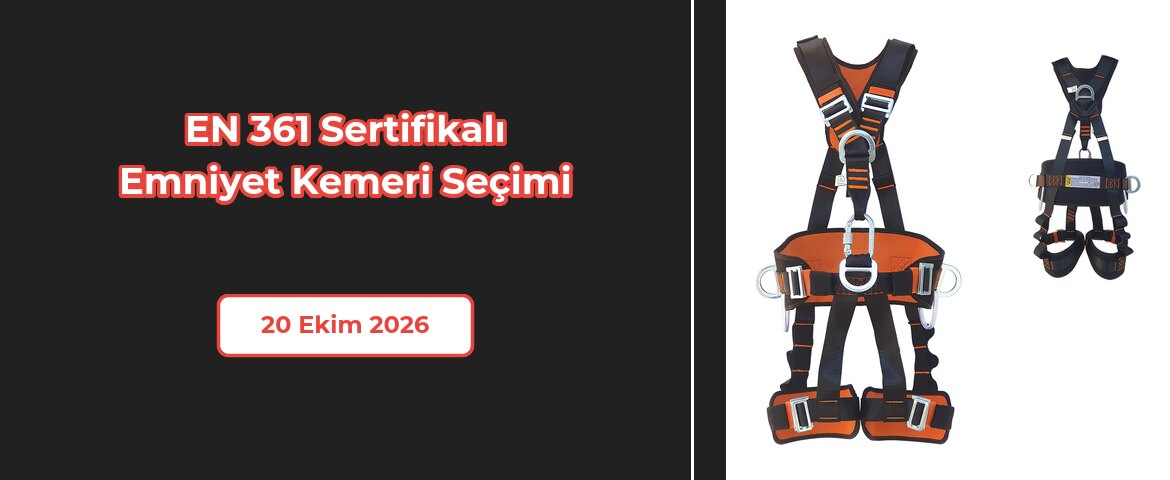
Parachute Type Safety Harness
The parachute type safety harness consists of belts or thick ropes used to reduce the risk of falling for workers working on tall buildings.
Points to Consider with a Parachute Type Safety Harness
- Check whether the colours of the harness or ropes have changed.
- Check whether the harness or rope has any cuts, tears, melting or wear.
- Make sure the straps have not come loose from their places.
- Test the soundness of the hooks.
- Make sure the harness or ropes have not become deformed.
- Check whether the brand on the harness is legible.
- Make sure its shelf life is at least 5 years.
What Are the Design Features of a Parachute Type Safety Harness?
- The safety harness must be easy to put on and take off.
- It must not restrict body movements.
- It must be suitable for long-term use and be of high quality for safety.
- It must not obstruct the blood circulation of a person left suspended.
Let our team recommend the best equipment for your needs and quote you quickly.