
In This Article
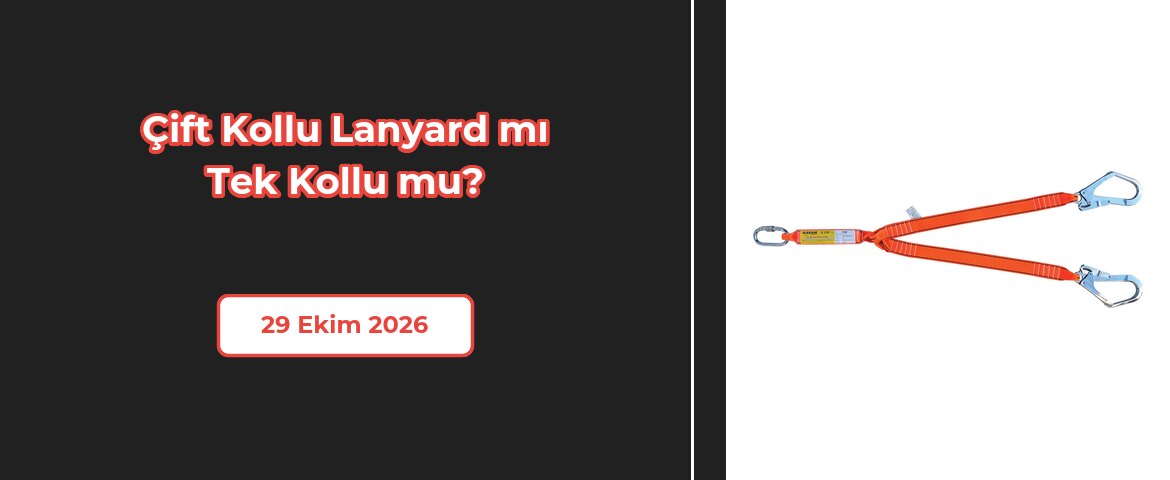
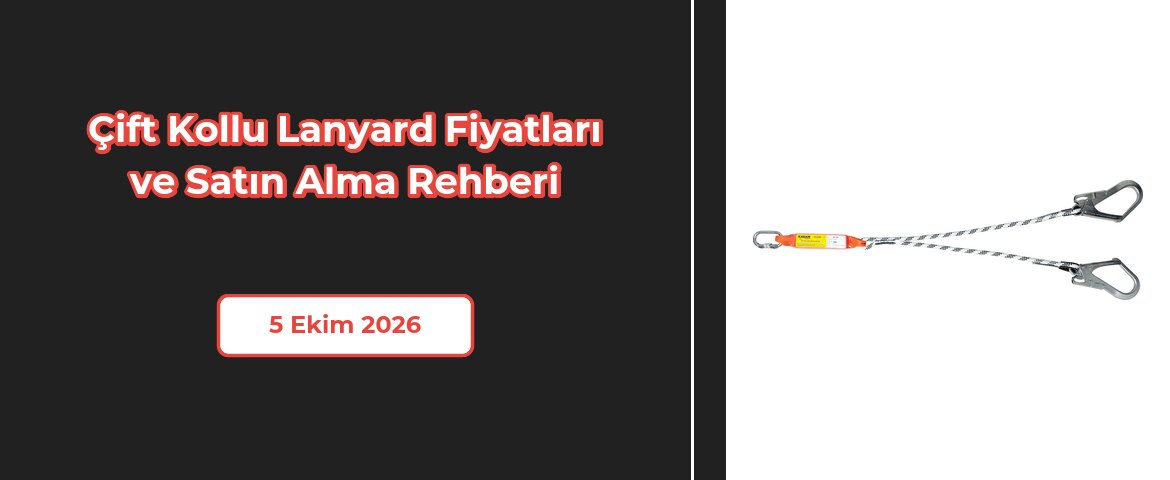
One of the basic rules of working safely at height is choosing the right personal protective equipment. Foremost among this equipment are double-leg lanyards, an important part of the fall arrest system. A double-leg lanyard gives the user mobility while at the same time offering a high level of safety. However, choosing the right product is of vital importance.
Material Quality and Durability of the Lanyard
One of the first factors to consider when choosing a double-leg lanyard is material quality. Both the inner and outer structure of the product must be resistant to environmental conditions. It must offer a structure that resists external factors such as abrasion, wear, UV rays, humidity and rain. Materials such as polyamide, polyester or high-modulus polyethylene (HMPE) are frequently used in lanyard types that offer high durability. At the same time, for user safety, the product must be designed so that its load limits are not exceeded.
Load Capacity and EN Standards
The safety of personal protective equipment used during work at height is a critical factor that directly affects the user's health. In this context, the load capacity of double-leg lanyards and their compliance with international standards are of great importance. Various EN standards have been developed to guarantee the safety of these products. These standards and the required characteristics can be listed as follows:
- EN 354: The basic standard for lanyards.
- EN 355: Lanyards containing a shock absorber must comply with this standard.
- EN 362: Specifies the carabiner standards for the hooks used.
- It must have a minimum load capacity of 100 kg.
- It must withstand a force of 22 kN (kilonewtons).
- It must have successfully passed fall impact tests.
- All these documents must be supplied with the product.
The safe use of double-leg lanyard models depends on their physical durability and their compliance with international safety standards. Choosing products that have been tested and approved according to EN standards plays a critical role in preventing possible accidents. For this reason, it must always be checked that the products to be purchased are supplied with the necessary documents and have passed all tests.
Does It Have a Shock Absorber Feature?
One of the most critical features of a lanyard in terms of safety is whether or not it has a shock absorber. The shock absorber protects the body from sudden jolts by absorbing the force generated at the moment of a fall. Thanks to this feature, the spine, bones and internal organs are not harmed by high energy. In the event of a fall, the shock absorber deploys and reduces the fall force to below 6 kN. This feature should be considered mandatory, especially in areas where work is performed at height.
Type of Hooks (Carabiners) and Locking Mechanism
The carabiners at both ends of the lanyard are the basic building blocks of a secure connection. The type of carabiner and its locking system directly affect safety in use. Carabiners with a screw or automatic locking mechanism must be designed to prevent opening at the moment of a fall. Being made of stainless steel or aluminium alloy ensures a long service life. At the same time, their compliance with CE and EN 362 standards should be checked. A wide gate opening makes it easy to attach to different anchor points.
Length and Adjustability
The length of a double-leg lanyard should be determined according to the working height and environmental conditions. Generally produced in lengths of 1.5 to 2 metres, lanyards should be adjustable for different user heights and methods of use. While adjustable designs provide flexibility for different tasks, excess length can increase the fall distance. Short lanyards, on the other hand, can restrict mobility. An adjustment mechanism that is robust and user-friendly, and that allows the two legs to be adjusted independently of each other, offers ease of use.
Suitability for the Area of Use
Every line of work and every working environment has its own requirements. For this reason, the choice of a double-leg lanyard should be tailored to its intended use. For example, insulating materials should be preferred when working on power lines, while abrasion-resistant materials should be used in the construction sector. For work in confined spaces, compact and lightweight lanyards are recommended. If work at height is continuous, a shock absorber feature must be present; in mountaineering and rescue operations, models with special hooks should be preferred.
Brand and Certification Information
Well-known brands that have gained trust internationally should be preferred. The certificates a brand supplies with the product show that the product has passed tests and meets certain quality standards. The CE certificate, documents of compliance with EN norms and quality certificates such as ISO 9001 are important for using the product with confidence. In addition, the brand's history, customer reviews and safety record should also be evaluated.
Stitching Quality and Safety of Connection Points
The physical durability of a double-leg lanyard model lies in its production details. In particular, the stitching and connection points must show high strength. Double or triple stitching, high-quality thread and welded, durable connection rings should be preferred. Protective sleeves over the stitched areas delay wear and extend the product's service life.
Product Warranty Period and After-Sales Support
In product selection, not only physical features but also after-sales services are important. The warranty period and support services offered by the lanyard manufacturer increase user satisfaction. Factors such as a manufacturer's warranty of at least 1 year, a technical support line, the provision of spare parts or maintenance services, and a product registration system should be taken into account when making a choice.
Price-Performance Balance
The relationship between price and performance should be taken into consideration. The most expensive product may not always mean the safest. Likewise, very cheap products carry the risk of low quality. For this reason, affordable products that provide long-term use and safety should be preferred. Whether the quality certificates and the features of the product are worth the price you pay is an important criterion when making a choice.
Let our team recommend the best equipment for your needs and quote you quickly.