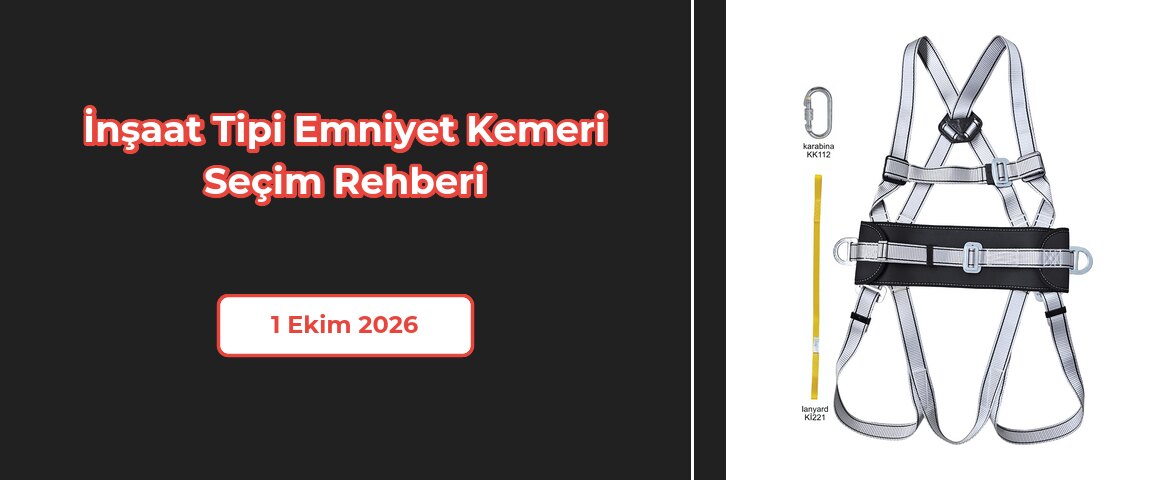

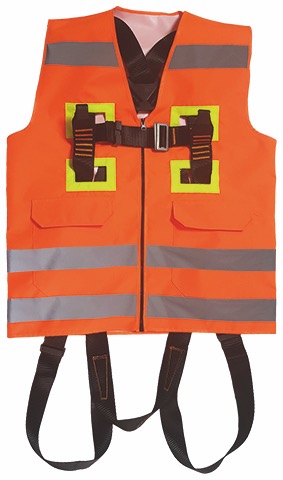
Among the legal regulations on the use of safety harnesses against hazards in working conditions, the first source is the law on protection against accidents in factories that came into force in the US state of Massachusetts in 1877. In addition to many provisions, such as equipping shaft and gear systems with guards and the prohibition of cleaning machines while they are in motion, this law also contains provisions on safety belts.
In our country, according to Article 521 of the Occupational Health and Safety Regulation (İSİSGT), which was issued under Article 74 of Labour Law No. 1475 that came into force in 1971 and itself came into force in 1973: on the exterior parts and roofs of buildings higher than 4 metres, or in places of similar height, where work on guarded platforms is not possible, persons engaged in maintenance and repair work and persons engaged in all kinds of building demolition and dismantling work must take the necessary safety measures. Workers will be provided with suitable personal protective equipment such as safety helmets, waist ropes and safety harnesses, and workers will be obliged to use them.
According to Article 7 of the Occupational Health and Safety Regulation in Construction Works, which came into force in 1974, the tools and equipment relating to protective measures, including scaffolds, platforms, walkways, guardrails, stair railings, safety ropes and nets, chains, cables and all other necessary materials used in construction works, must be provided to workers. The safety harness and the other materials and tools must be suitable for the work being done and sufficient to protect workers from all kinds of hazards. The installation materials and tools used must be suitable for the work being done and of such quality and strength as to bear the load the worker can carry, so as to protect workers from all kinds of hazards. Article 13 of this regulation states that it is mandatory to provide safety harnesses to those working in places more than 3 metres above floor level where there is a danger of falling or slipping, to roof tilers, to those carrying out all kinds of exterior painting and gutter work, to those operating winches and cranes, and to workers entering wells, sewers and pits of similar depth. Workers are obliged to use this harness.
In the 1999 Statistical Yearbook of the SSK (Social Insurance Institution) General Directorate, a comparison was made of the distribution of occupational accidents by cause, with regard to falls.
The table is as follows:
|
|
1994 |
1995 |
1996 |
1997 |
1998 |
|
Falls resulting from accidents |
10 886 |
10 405 |
10 152 |
12 723 |
11 287 |
|
Total occupational accidents |
92 087 |
87 960 |
86 807 |
98 318 |
91 895 |
Let our team recommend the best equipment for your needs and quote you quickly.