In This Article
A full body harness weight limit applies to the total user mass, not just body weight: clothing, personal protective equipment, the tool bag and any carried material all count. That total must stay within the maximum rated load printed on the harness label, and the lanyard, energy absorber, connectors, anchor and self-retracting device must be rated for the same mass.
What is total user mass?
Total user mass is everything the harness and connecting system must stop in a fall. The number on the bathroom scale is only one part of it. Once you add the harness, helmet, safety boots, winter jacket, tool belt and the material in hand, the figure rises noticeably, and the selection has to be based on that higher figure.
The most common mistake in harness selection is asking how much a worker weighs and stopping there. On site, the same person may work in light overalls in summer and in heavy clothing with a full tool load in winter. The assessment should therefore be based on the heaviest realistic scenario for that job. Listing each item separately gives both the purchasing team and the safety professional a clear, auditable record.
- Body weight: the worker's current weight, measured rather than estimated.
- Clothing and footwear: varies with the season; winter gear represents the worst case.
- Personal protective equipment: the harness itself, helmet, eyewear, gloves and, where needed, respiratory protection.
- Tool bag and tool lanyards: hand tools attached to the harness and the hangers that carry them.
- Carried material: fixings, cable reels, small parts and anything else taken up to the work position.
Are size, weight limit and breaking strength the same thing?
No. Size is about how the harness fits the body and whether it can be adjusted correctly. The weight limit, or maximum rated load, is the highest total user mass the harness is approved for. Breaking strength is the force a component, such as a carabiner, withstands before failure. They are three separate criteria and none can replace another.
A larger size does not mean a higher mass rating. An XXXL harness carries the same maximum rated load as the S/M size of the same model, and that value is the one on the label. Likewise, a connector with a high kN breaking strength does not raise the user mass limit of the system. The table below shows how to read each concept in practice.
| Concept | What it describes | Where to find it | Common mistake |
|---|---|---|---|
| Size | How the harness fits waist, leg and body height | Size on the label and the size chart in the user manual | Assuming a bigger size suits a heavier worker |
| Maximum rated load | Highest total user mass the harness is approved for | Product label, user manual, certificate | Counting body weight only |
| Breaking strength | Force a component withstands before failure (kN) | Markings on connectors and anchors, technical data | Reading the kN value as a user weight limit |
Where is the maximum rated load shown?
The maximum rated load appears on the permanent label sewn onto the harness, in the user manual and in the description section of the EU type-examination certificate. In Karam manuals the label diagram shows it under "Max. Load Capacity". The value must match across all three documents; if it does not, contact the manufacturer before the harness is used.
If the label is illegible or missing, the capacity of the harness cannot be verified, which is why Karam manuals list a secure, readable label as part of the periodic inspection. The label also carries the model, size, serial number, year of production, standard and notified body number. During delivery, checking that every unit matches the model ordered prevents mix-ups later in the store room. Model-specific manuals are available in the user manuals section.
Maximum rated load of Karam harnesses
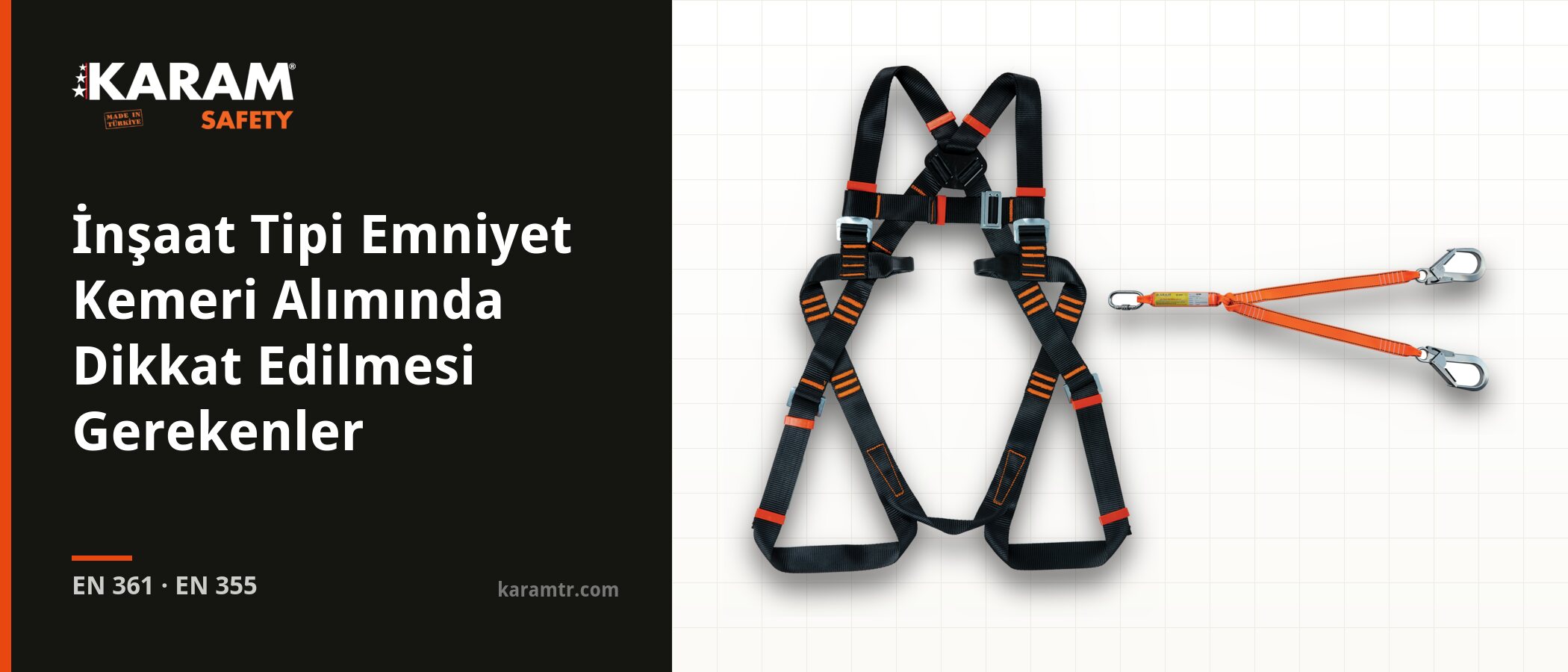
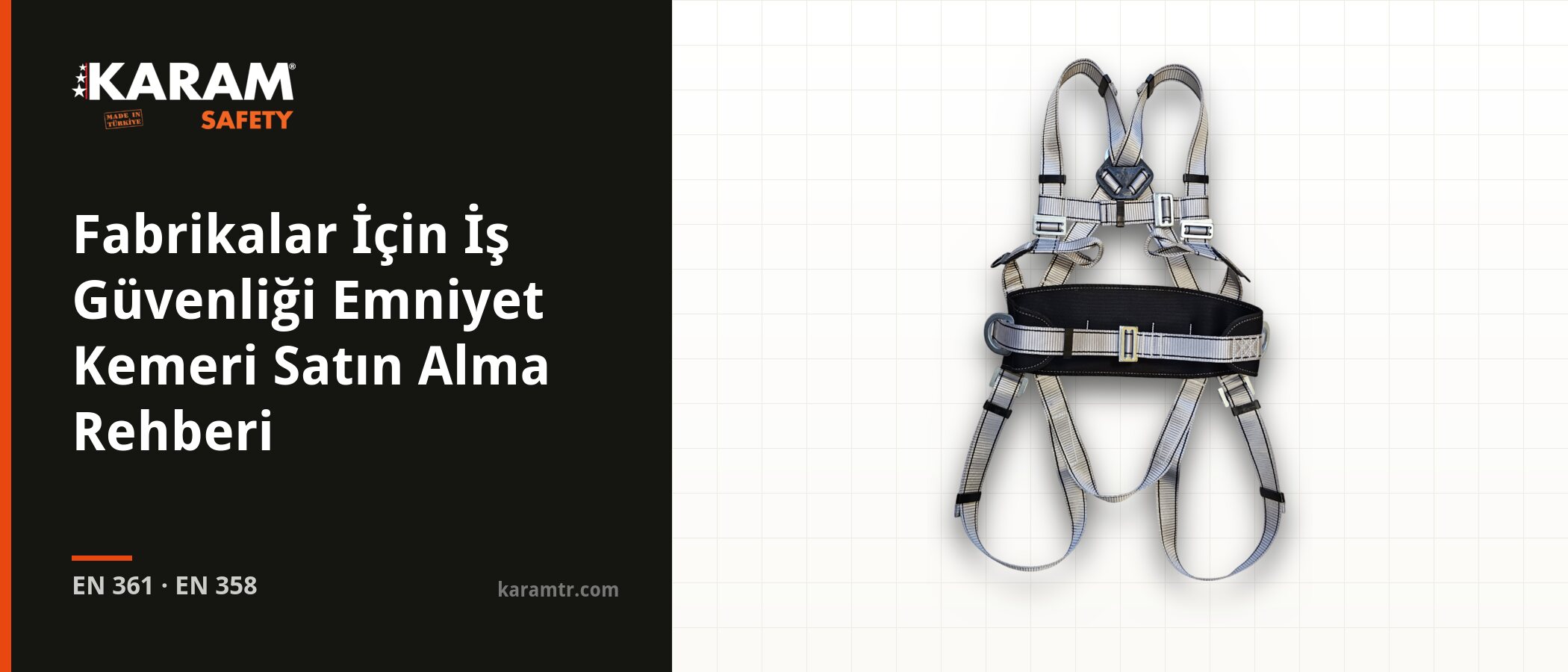
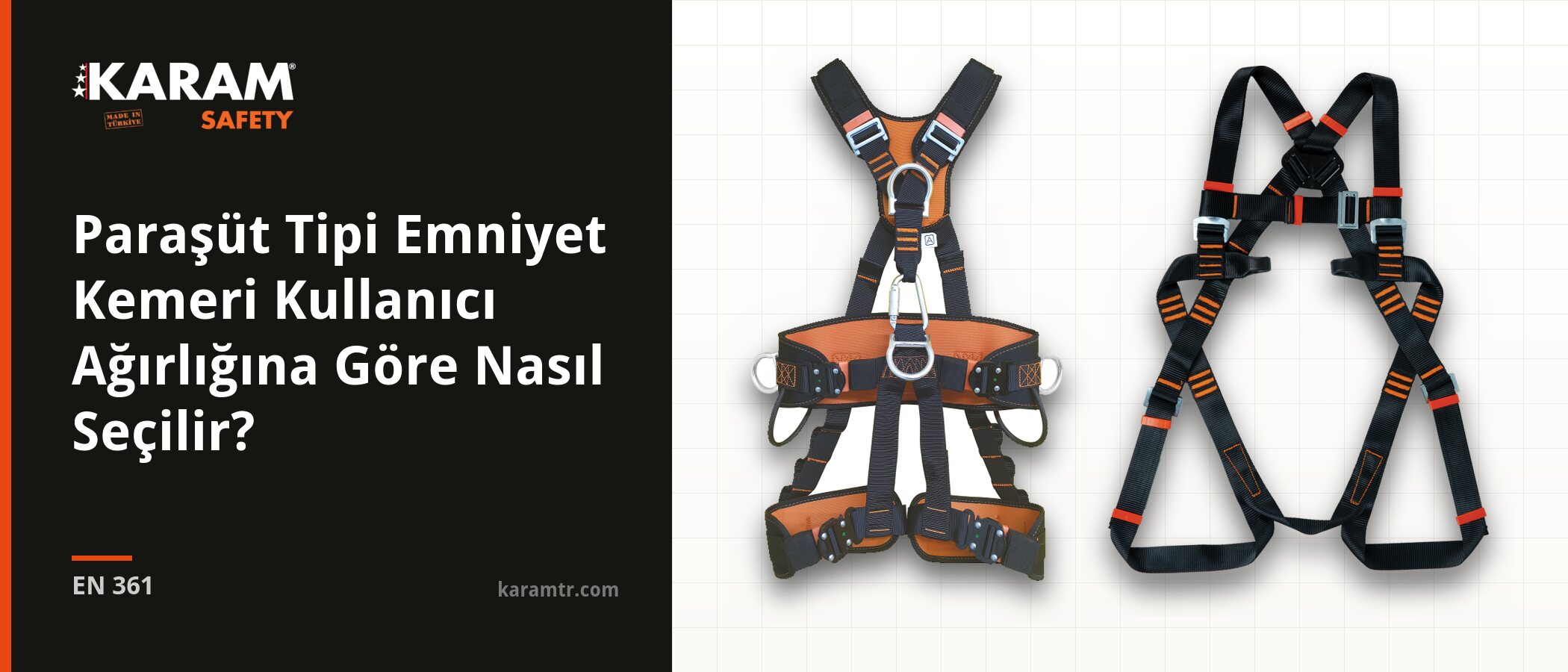
The maximum rated load of Karam full body harnesses depends on the model. For KP45 and KP45 AO the certificate, technical data sheet and user manual consistently state 150 kg. The KP30 and KP37 manuals state 125 kg. These values apply to total user mass, not to body weight alone, so tools and clothing must be included in every comparison.
| Model | Maximum rated load | Standards | D-rings | Harness weight |
|---|---|---|---|---|
| KP45 | 150 kg | EN 361, EN 358, EN 813 | 1 back, 2 front, 2 side (steel) | 2.40 kg |
| KP45 AO | 150 kg | EN 361, EN 358, EN 813 | 1 back, 2 front, 2 side (aluminium) | 2.35 kg |
| KP30 | 125 kg (manual) | EN 361, EN 358 | 1 dorsal fall arrest, 2 side positioning | 1.83 kg |
| KP37 | 125 kg (manual) | EN 361 | 1 dorsal, steel | 1.68 kg |
For a worker whose total user mass exceeds 125 kg, the KP45 full protection safety harness or the KP45 AO with automatic buckles can be considered. Where total mass stays at or below 125 kg and a work positioning belt is needed, the KP30 fall arrest and positioning harness is an option; where fall arrest alone is enough, the KP37 harness without waist support fits. All models can be compared in the safety harness range.
On KP45 and KP45 AO the 150 kg value is stated separately for the fall arrest harness, the work positioning belt and the sit harness sections. The KP30 manual likewise approves its positioning belt for a user, including tools and equipment, of up to 125 kg. In other words, the phrase "including tools and equipment" comes directly from the manufacturer's own documentation; adding tools to the calculation is a requirement of the manual, not an interpretation.
The weakest link principle
A fall arrest system is only as strong as its lowest-rated component. Even if the harness is approved for 150 kg, a lanyard, energy absorber, connector, anchor or self-retracting device documented for a lower user mass sets the limit of the whole system. The Karam KP45 manual explicitly requires the harness to be used with equipment of the same load capacity.
This principle matters most on construction sites and in factories where equipment is issued from mixed stock. A 150 kg harness taken from the store does not mean the lanyard handed out with it is rated for the same mass. Each component label should be read separately, and the system capacity should be set by the lowest value on those labels.
Energy absorbing lanyard
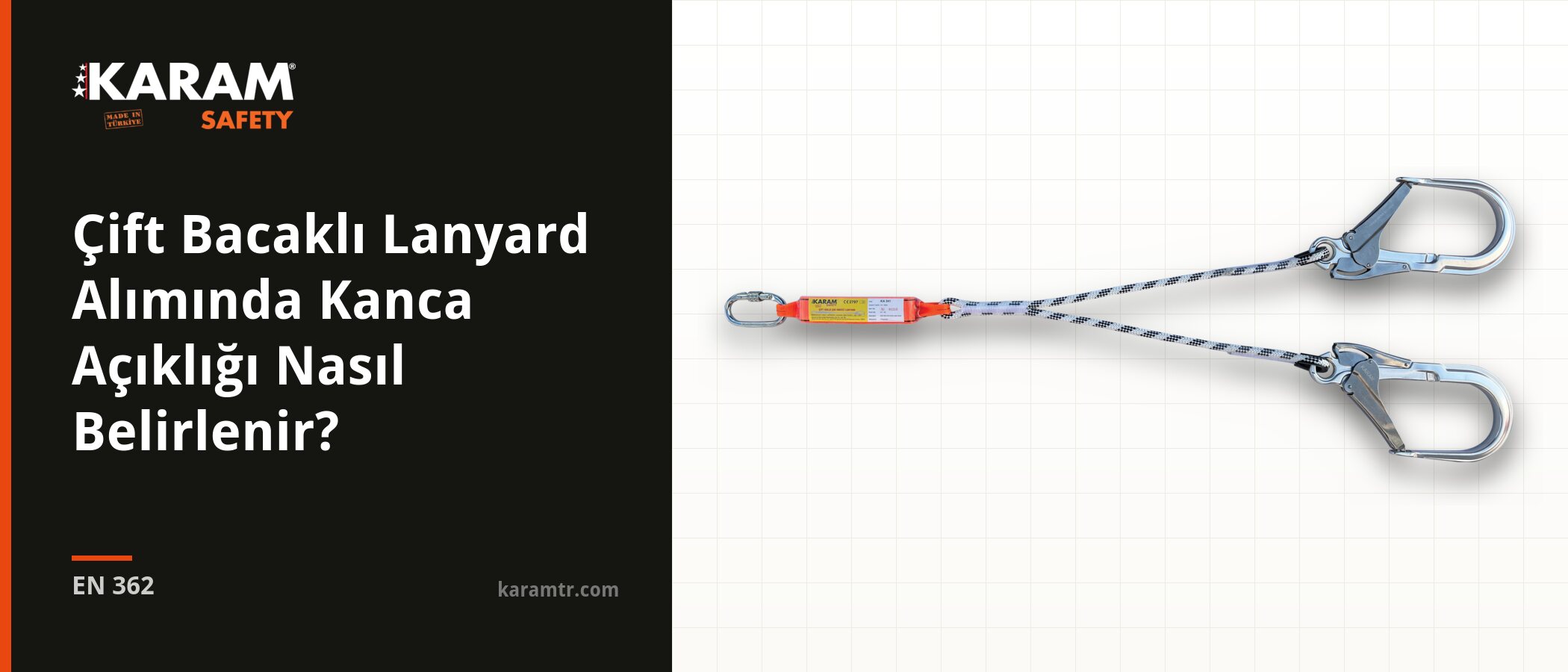
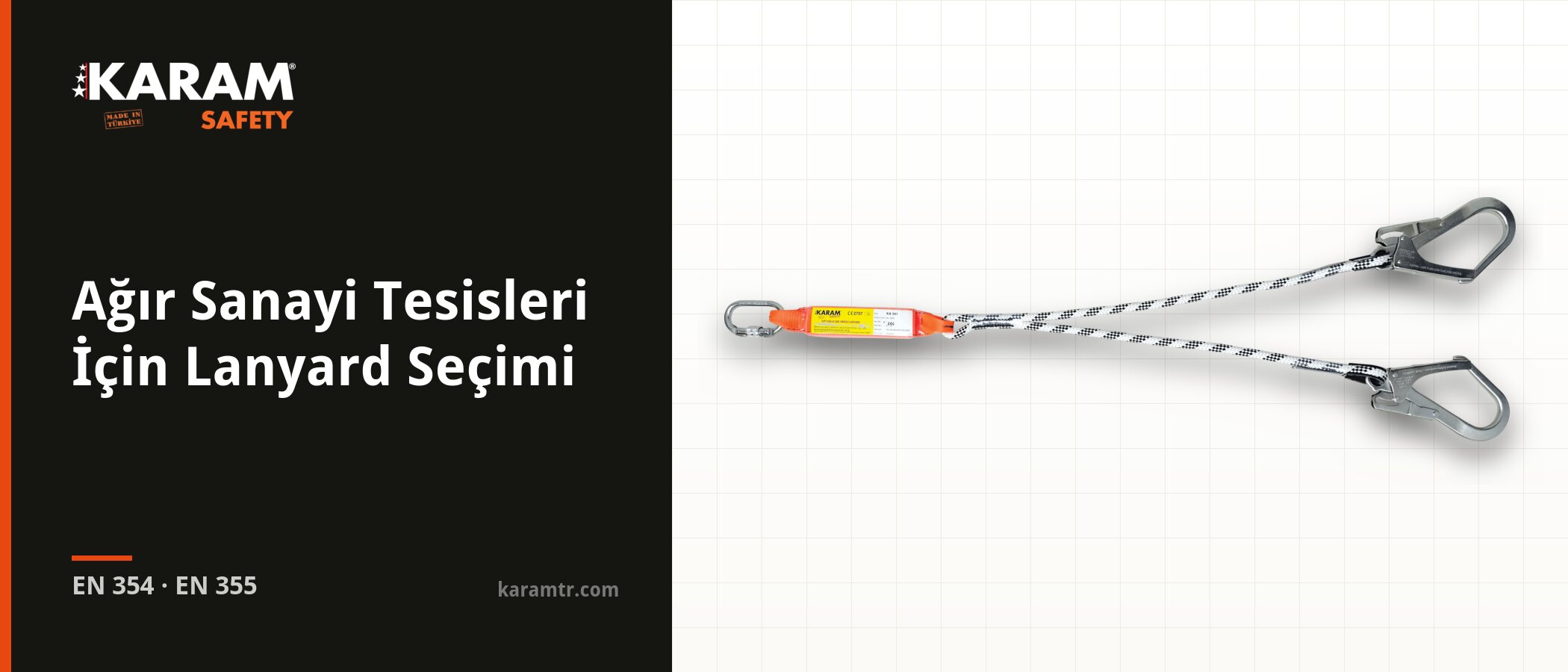
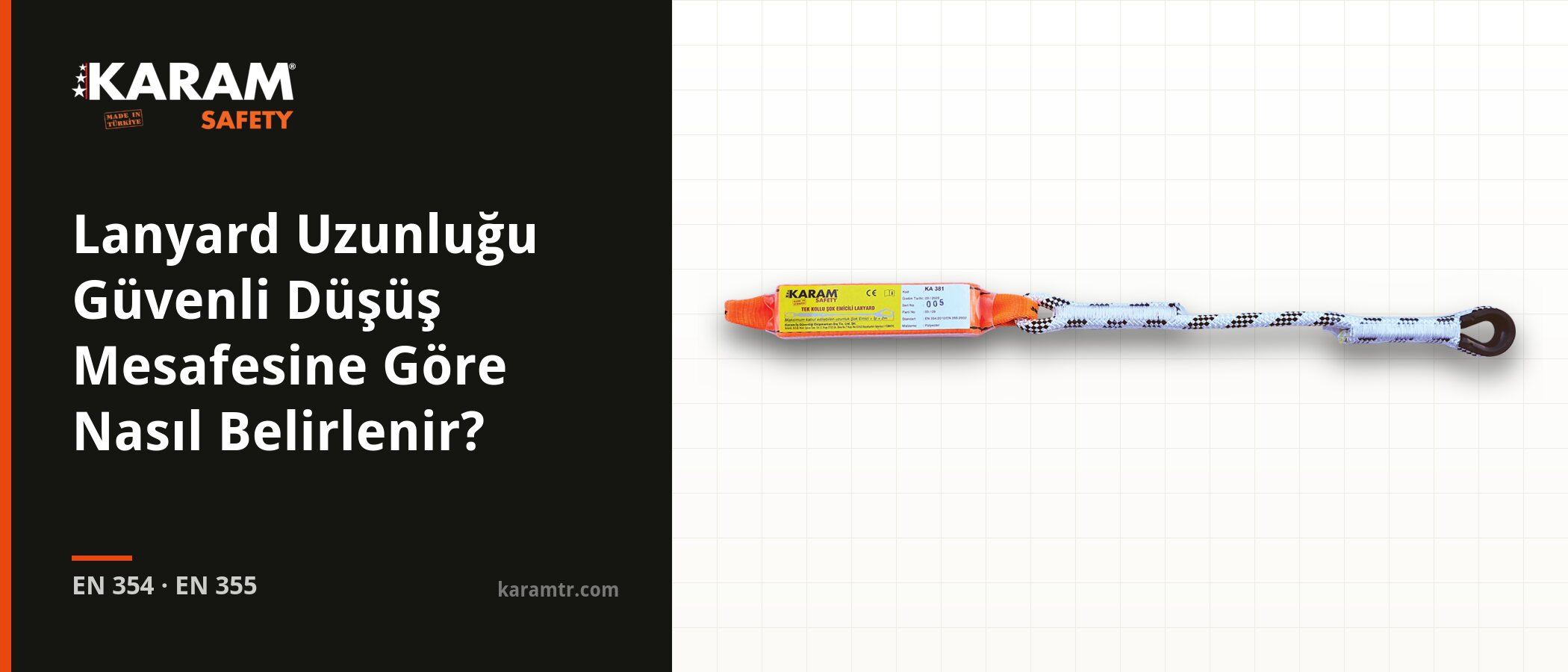
Under EN 355, the energy absorber performance test uses a 100 kg test mass, and the arrest force is expected to stay at or below 6 kN. If total user mass is above 100 kg, you need to confirm that the manufacturer has tested and documented the absorber for the higher mass. Look for this on the lanyard label and in its manual; if it is not there, do not select that product for the user. When choosing energy absorbing lanyards, you can ask Karam for this confirmation.
Connectors
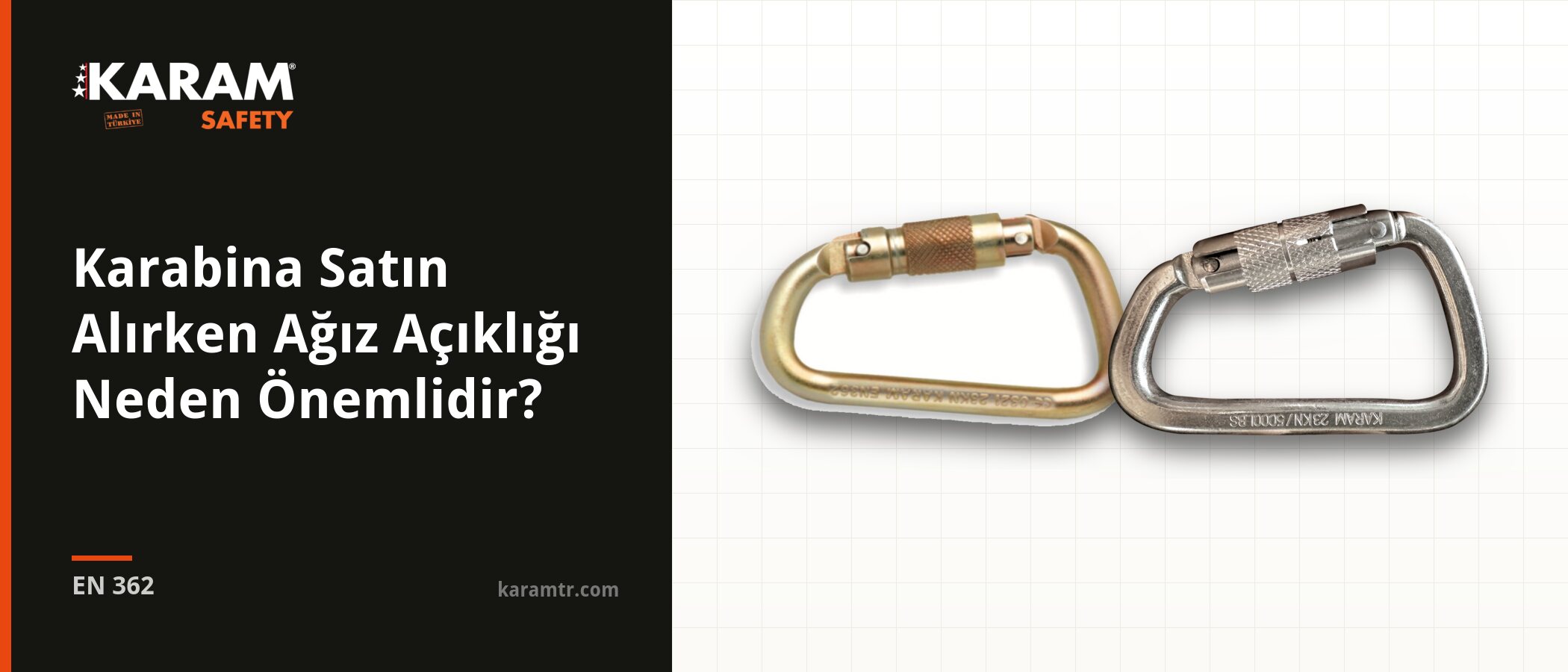
Carabiners and hooks must comply with EN 362. Connectors are marked with a breaking strength in kN; this is not a user weight limit, but it shows whether the component suits its place in the system. Remember that a carabiner's strength drops considerably when the gate is not closed and locked. For heavier users, the connector should be assessed together with the lanyard and harness as one system.
Anchor point
The anchor should be above the user and comply with EN 795. The Karam energy absorbing lanyard manual requires an anchor strength of at least 12 kN. Because a heavier user increases the load on the anchor, a competent person's assessment of structural anchors should not be skipped, and the conditions of use on temporary anchor slings and connectors should be read as well.
Self-retracting lifeline
Each self-retracting device under EN 360 has its own maximum user mass, printed on its label. A 150 kg harness does not mean the device is rated for that mass. When choosing from the self-retracting fall arresters, share the total user mass with the Karam team to confirm a suitable model.
Why can fall clearance increase for heavier users?
A higher total mass means more energy in a fall. While dissipating that energy, the energy absorber may deploy further, and the harness and connecting elements may stretch more. Required fall clearance can therefore increase for heavier users; the exact figure can only be taken from the product manual and the specific equipment combination.
Karam manuals describe the safe clearance below the user as A + B + C + D: the length of the lanyard and connectors, the length of the deployed energy absorber, the user's height and a safety margin to the ground or obstacle. This is a product-specific calculation and should not be treated as a universal formula. See our guide to lanyard length and fall clearance for detail. With a heavier user, low anchors, limited working height or obstacles below call for an even more careful clearance check.
Worked example: 103 kg total mass
The example below is illustrative and only shows the checking logic. A maintenance technician weighing 95 kg carries about 8 kg of extra load: harness, helmet, safety boots, tool hangers and small hand tools. Total user mass is therefore taken as 95 + 8 = 103 kg, and the entire system is checked against that figure rather than against body weight.
- Harness: 103 kg is below the 125 kg stated in the KP30 and KP37 manuals and the 150 kg stated for KP45 and KP45 AO. Capacity is fine on the harness side; the choice depends on job type and fit.
- Energy absorbing lanyard: 103 kg is above the 100 kg EN 355 test mass. Do the lanyard label and manual include manufacturer documentation for this mass? The system should not be approved until this is confirmed.
- Connectors: check EN 362 marking, class and gate locking; connectors supplied with the lanyard are part of this check.
- Anchor: confirm EN 795 compliance, a position above the user and at least 12 kN strength, as the lanyard manual requires.
- Self-retracting device: if used, the maximum user mass on its label must cover 103 kg.
- Fall clearance: compare the clearance data in the lanyard manual with the actual anchor height on site.
- Winter scenario: if heavier clothing raises the total further, repeat the calculation for the worst case.
In this example the harness capacity is not the issue; the deciding item is whether the energy absorbing lanyard is documented for use above 100 kg. Had the same calculation been done with a 130 kg total, KP30 and KP37 would exceed the 125 kg limit in their manuals, leaving only KP45 or KP45 AO suitable on the harness side.
If you would like help matching harnesses and lanyards to your team's total user mass, message Karam on WhatsApp with the worker weights, equipment load and type of work.
Checklist by total mass band
The table below splits total user mass into bands and shows what should be checked in each. Values in the harness column are based only on maximum rated loads verified in Karam documents. For other components, the exact value must be read from each product's own label and user manual.
| Total user mass | Harness (per Karam documents) | Lanyard and energy absorber | Other components |
|---|---|---|---|
| Up to 100 kg | KP30, KP37 (125 kg), KP45, KP45 AO (150 kg) suitable for capacity | Within the EN 355 test mass; still read label and manual | Check EN 362 connectors, EN 795 anchor and device labels |
| 100–125 kg | KP30, KP37, KP45, KP45 AO suitable for capacity | Manufacturer documentation needed for use above 100 kg | Confirm maximum user mass of any self-retracting device |
| 125–150 kg | KP45 and KP45 AO (150 kg); KP30 and KP37 not used in this band | Product documented for this mass is mandatory | All components documented for the same mass; reassess clearance |
| Above 150 kg | Exceeds the maximum rated load of the Karam models in this article | Not solved by standard selection | Replan method and equipment with a competent person; consult Karam |
How do you choose the right size?
Size is chosen so the harness sits correctly on the body and every strap closes with enough adjustment left; it has nothing to do with capacity. The size charts in Karam manuals are based on waist, leg and body height. KP45 comes in S/M, L/XL, XXL and XXXL. The right size lets you tighten the straps comfortably with the buckles in mid-range.
With heavier or larger workers, the most frequent problems are leg straps forced closed with too little adjustment, or an oversized harness that stays loose. Both prevent the load from being distributed correctly in a fall. A practical check in the KP37 manual: once adjusted, three fingers should fit between the strap and the body. If thick winter clothing will be worn, try the size on with that clothing. Certification and marking are covered separately in our article on choosing an EN 361 certified harness.
Adjustment and suspension test
Karam manuals recommend a size, adjustment and comfort test in a safe place before first use. This suspension test shows whether the harness fits correctly with the worker's real total mass and equipment. It should be done just above the ground, under supervision, with a means of rescue ready, so that any problem can be corrected immediately.
- Lift the harness by the dorsal D-ring and check that no strap is twisted.
- Put on the shoulder, chest, waist and leg straps in the order given in the manual and close the buckles.
- Tighten the straps so that adjustment remains and three fingers fit between strap and body.
- Attach the tool hangers and equipment used on the job so the total mass reflects real conditions.
- Connect to a safe point and hang briefly; watch for pinching, slipping or difficulty breathing.
- Record the result with the size and serial number on the equipment record form.
Prolonged suspension can lead to suspension trauma, so every work at height task needs a rescue plan. The manuals also require users to be medically fit for work at height. Rescuing a heavier user may require more force and the right equipment, so total mass should be reflected in the rescue plan as well.
How should tool and material load be managed?
Tools attached to the harness add directly to total user mass, and dropped tools must also be prevented from injuring people below. Tools are therefore carried on tool lanyards attached to the harness material loops. KP45 has 2 material loops and KP45 AO has 2+2, which helps spread the tool load.
The Kİ01 single tool hanger is made of 14 mm elastic webbing, with an unextended length of 65 cm, an extended length of 115 cm and a carrying capacity of 2.5 kg stated on its product page. The Kİ02 double tool hanger lets you secure two tools at once, with lengths of 72 cm unextended and 130 cm extended. The hangers themselves are light, but together with the tools they belong in the total mass calculation. Lifting heavy material separately, rather than hanging it on the harness, is better for both capacity and working comfort.
Steps before purchasing
When buying harnesses by user weight, the goal is to give every worker a system that is right for capacity and fit, with complete documentation. The steps below work for a single worker and for bulk orders alike, and they leave a clear record for audits.
- Record the current body weight of every worker at height and the heaviest equipment scenario.
- Calculate total user mass and group workers into bands, such as below 125 kg and 125–150 kg.
- Choose the harness model for each band by maximum rated load; above 125 kg, consider KP45 or KP45 AO.
- Confirm that lanyard, energy absorber, connectors and self-retracting device are documented for the same mass.
- Work out the size distribution from the size chart and plan a suspension test at delivery.
- Check that certificate, user manual and label details match the delivered product.
- Set up records for pre-use checks and a competent person inspection at least every 12 months.
Frequently Asked Questions
What is the weight limit of a full body harness?
It depends on the model and is printed on the label as the maximum rated load. For Karam KP45 and KP45 AO the value is 150 kg; the KP30 and KP37 manuals state 125 kg. The limit applies to total user mass, including clothing, PPE, tools and carried material, not just body weight.
Which harness should a 120 kg worker use?
Start by calculating total mass. Adding a few kilograms of clothing and equipment to 120 kg body weight usually takes the total above 125 kg. In that case, the Karam KP45 or KP45 AO with a 150 kg maximum rated load is suitable. The lanyard, energy absorber and other components must also be documented for that mass.
Does a larger harness size carry more weight?
No. Size only determines how the harness fits the body. The S/M and XXXL sizes of the same model have the same maximum rated load. Giving a larger worker a bigger size solves the fit problem but not the capacity question; for capacity, check the maximum rated load on the harness label.
If the harness is rated 150 kg, is the lanyard too?
Not automatically. Each component has its own user mass limit, and the system limit is set by the lowest-rated component. Because the EN 355 energy absorber test uses a 100 kg test mass, use above 100 kg depends on the manufacturer having tested and documented that mass. Read the lanyard label and manual separately.
Should the tool bag be included in total mass?
Yes. Tools attached to the harness, tool hangers and carried material are all part of the load the system must arrest in a fall. Karam manuals define the positioning belt capacity as including tools and equipment. Total mass should therefore reflect the heaviest real working condition of the worker on that task.
Does fall clearance change for a heavier user?
It can. Greater mass creates more energy in a fall; the energy absorber may deploy further and the harness may stretch more, so the clearance required can increase. The exact value must be based on the lanyard manual, the equipment combination and a competent person's assessment of the site.
Why is a suspension test carried out?
A suspension test shows that the harness is the correct size, has enough adjustment and offers acceptable comfort for the intended use. Karam manuals recommend carrying it out in a safe place before first use. The test should be done with the worker's actual equipment and under supervision.
How can I get prices for harnesses by user weight?
Pricing depends on model, size distribution, quantity and any lanyards or accessories ordered together. Send your team's total mass bands and the models you need to the Karam team on WhatsApp, and a current quotation will be prepared with a suitable combination.
Choosing the right harness starts with an honest calculation of total user mass, a comparison of that mass with the harness maximum rated load and confirmation that every component in the system is rated for the same mass. Size and adjustment are the final steps that make that choice safe on site. Karam offers options for different mass bands with the KP45, KP45 AO, KP30 and KP37 models.
Let our team recommend the best equipment for your needs and quote you quickly.