
In This Article
Buying safety harnesses for a factory is a management process rather than a single product choice: the risk assessment defines the tasks, harness types are standardised, the size split is planned, the document set and traceability are verified, and issue records, training and periodic inspection are designed from day one. This guide sets out the steps that purchasing, HSE and maintenance teams can share.
How is corporate procurement different from individual selection?
In individual selection the question is “which harness suits this person?”. In corporate procurement it becomes “which harness families, how many sizes and which record system will cover every work-at-height task on site?”. The decision belongs jointly to purchasing, HSE and maintenance, and the result is not a product but a documented equipment programme.
We covered the basic criteria for choosing one worker's harness in our article on what to look for when choosing a safety harness. This guide scales those criteria up to the whole plant: a technician servicing roof equipment and a warehouse operator working on racking need different harnesses, yet both must sit inside the same record, inspection and training system.
In Türkiye, the employer's duty to select and provide suitable personal protective equipment, inform workers and keep equipment in good condition is assessed under the PPE Regulation aligned with (EU) 2016/425, the Regulation on the Use of Personal Protective Equipment at Workplaces and the Regulation on Health and Safety Conditions for the Use of Work Equipment. Building the purchasing file around this framework also makes audits easier.
The procurement process step by step
The sequence below covers the full cycle, from the moment a need arises until the equipment is withdrawn from service. Each step should have an owner and an output that goes into the file, so the process depends on records rather than on individuals.
- Update the risk assessment: List every task that requires work at height, the available anchorages and the rescue needs.
- Build a task map: Match each task with its location, frequency, number of workers and required connection type.
- Standardise harness families: Reduce the tasks to a small number of harness types and define the standard and attachment points of each.
- Plan the size split: Collect waist, leg and body height measurements and run trial fittings.
- Write the technical specification: Itemise standards, attachment points, load capacity, buckle type, documents and labelling.
- Verify the document set: Request the EU type-examination certificate, declaration of conformity, user manual in the local language and technical data at the quotation stage.
- Carry out goods-in inspection: Compare labels, serial numbers, production dates and models against the purchase order.
- Issue and register: Assign each harness to one person by serial number and record the date of first use.
- Complete training: Teach donning, adjustment, pre-use checks and the rescue plan in a practical session.
- Run the inspection and renewal cycle: Periodic inspection at least every 12 months, withdrawal after a fall and at end of life.
| Procurement step | Owner | Output document |
|---|---|---|
| Risk assessment | HSE specialist, department heads | Updated risk assessment, list of work-at-height tasks |
| Task map and needs list | HSE specialist, maintenance manager | Task–harness type matrix, quantity estimate |
| Size plan | Supervisors, HSE specialist | Size list per person, trial fitting notes |
| Technical specification | HSE specialist, purchasing | Approved technical specification |
| Quotation and supplier evaluation | Purchasing | Bid comparison and supplier evaluation form |
| Document verification | HSE specialist | Copies of certificate, declaration, manual and data sheet |
| Goods-in inspection | Warehouse, HSE specialist | Receiving inspection report, serial number list |
| Issue to user | HR or supervisor | Signed PPE issue form |
| Training | HSE specialist, training provider | Attendance list, training record |
| Periodic inspection | Competent person or manufacturer | Equipment inspection card, inspection record |
| Withdrawal | HSE specialist, warehouse | Withdrawal and disposal report |
From risk assessment to a needs list
A needs list comes from the risk assessment, not from a catalogue. First identify the tasks where work at height is genuinely required, then the points where collective protection such as guardrails, platforms or lifelines is not sufficient. A safety harness is the personal protective equipment that manages the residual risk, and it is planned as part of a system with anchorage, connectors and a rescue plan, never on its own.
How do you build a task map?
A task map is a table that lists every work-at-height job with its location, frequency, number of workers and required connection type. The maintenance manager sees the real workflow, the HSE specialist sees the risk and control measures, and purchasing sees quantities and delivery planning in the same table. The question “how many harnesses?” is then answered by tasks rather than by guesswork.
| Work area | Key planning question | Harness family to consider |
|---|---|---|
| Maintenance platforms, on top of machinery | Short but frequent access? Does the worker need to be positioned with both hands free? | KP37 for fall arrest; KP30 or KP10 where work positioning is also needed |
| Roofs and roof equipment | Is there horizontal movement? Will a lifeline or mobile anchor be used? | EN 361 harness with dorsal D-ring; KP30 or KP45 depending on movement and positioning |
| Racking and warehouse systems | Is the anchor above the worker? Is fall clearance sufficient? | KP37 or KP30; the connector is chosen according to fall clearance |
| Tanks and silos | How will rescue be carried out? Is a front or sternal attachment needed? | KP30 with chest attachment or KP37 K; KP45 for prolonged suspended work |
| Crane runways and overhead crane maintenance | Long positioning periods, tool carrying and horizontal transfers? | KP45 or KP45 AO, with a twin-leg lanyard |
The pairings in the table are a starting point; the final decision rests on the site risk assessment and a competent person's survey. In low-ceiling areas lanyard length and fall clearance are decisive, and we explain that reasoning in our guide to lanyard length and fall clearance. For connector choice in heavy plants, see our article on lanyard selection for heavy industry.
Why standardise harness types?
Standardisation means reducing the variety of harnesses on site to the smallest number of families the tasks actually require. Fewer models mean uniform training, simpler inspection criteria, smaller spare stock and less risk of the wrong equipment being used. In most factories a structure of three families covers the majority of tasks.
| Family | Standard | Attachment points | Load capacity stated in documents |
|---|---|---|---|
| KP37 | EN 361 | 1 steel dorsal D-ring | 125 kg (manual) |
| KP37 K | EN 361 | Chest and back anchorage connection | 125 kg (product page) |
| KP30 | EN 361 + EN 358 | 1 dorsal fall arrest D-ring, 2 side positioning D-rings | Tested with 125 kg according to EN 361 (manual) |
| KP30 with chest attachment | EN 361 + EN 358 | As KP30, plus chest anchorage connection | 125 kg (product page) |
| KP10 | EN 361 + EN 358 | 1 dorsal, 2 side D-rings | 100 kg (certificate) |
| KP45 | EN 361 + EN 358 + EN 813 | 5 steel D-rings: 1 back, 2 front, 2 side | 150 kg |
| KP45 AO | EN 361 + EN 358 + EN 813 | 5 aluminium D-rings, automatic buckles | 150 kg |
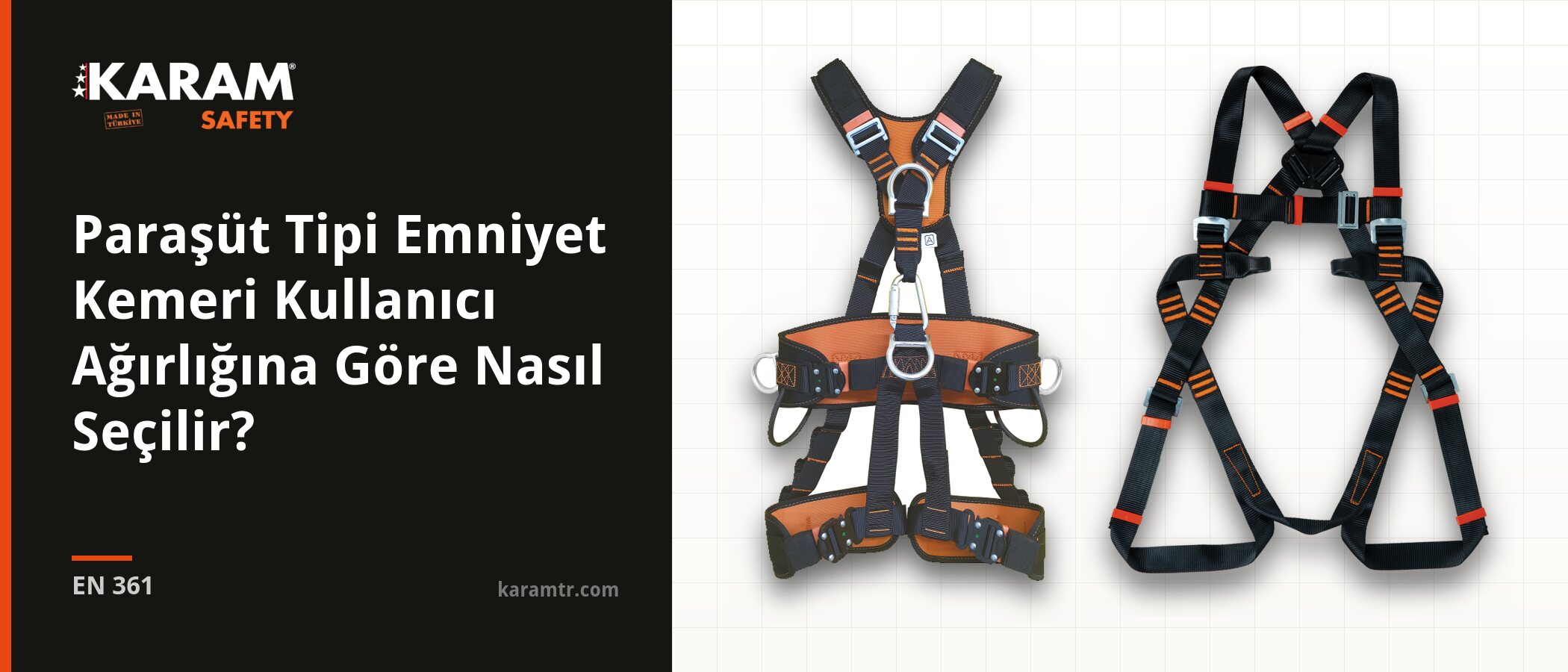
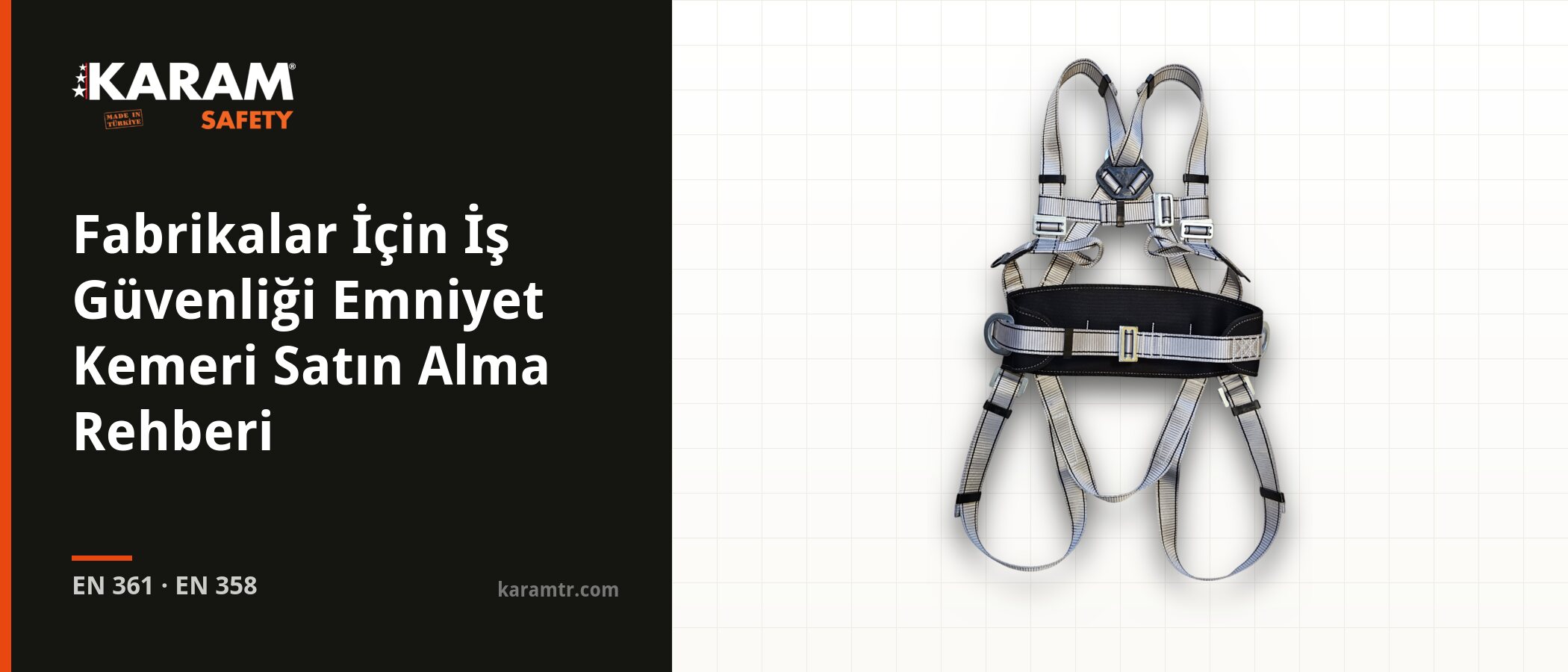
A practical standard could look like this: the single-point KP37 fall arrest harness for tasks that need fall arrest only; the KP30 fall arrest and positioning harness or KP10 for maintenance work that also requires positioning; and the KP45 full protection harness or the automatic-buckle KP45 AO for prolonged suspended work, seated work and multi-point connection. You can compare all families in the safety harnesses range.
Two rules belong in the specification. First, according to the manuals, the work positioning belt must not be used for fall arrest; fall arrest connections are made only to points marked “A”. Second, the lanyard, energy absorber, connector and fall arrester used with the harness must have at least the same load capacity. Load capacity, size and user mass are separate concepts; we explain the difference in our article on full body harness weight limit and user weight.
How do you plan the size split?
The size split is how the total quantity is divided between sizes, and it should be based on measurement, not estimation. Size selection in Karam manuals is based on waist, leg and body height measurements. Size does not mean the user's mass or the harness load capacity; the right size simply ensures the harness fits the body correctly and that adjustments stay within their working range.
- Measurement list: Collect waist, leg and height measurements for every person who works at height, department by department.
- Trial fitting: Ask for samples in each size and try them over both winter and summer workwear; a thick jacket can change the size.
- Suspension test: The manuals recommend a size, adjustment and comfort test in a safe area before first use.
- Adjustment range: According to the manual, three fingers should fit between the leg and the strap; a harness that is still loose with all straps fully tightened is too big, and one with no adjustment left is too small.
- Spares and new starters: Plan a small reserve in the most common sizes for items withdrawn at inspection and for new employees.
- Mass and equipment: Add tools and equipment to user mass and check separately that the harness and connectors match the capacity stated in their documents.
Available sizes vary by model; for example, the KP45 technical data sheet lists S/M, L/XL, XXL and XXXL. Before ordering, confirm the current size range of each model on its product page and in the size chart in its manual.
Which documents should you request?
In corporate purchasing the document set matters as much as the product itself. At the quotation stage, request at least four documents for each model and compare them with your specification: the EU type-examination certificate, the EU declaration of conformity, the user manual and the technical data. Karam harness certificates are based on EU type-examination (Module B) under Regulation (EU) 2016/425 as Category III PPE.
- EU type-examination certificate: The model name, standards and validity dates must match the product ordered. Karam certificates are available on the certificates page.
- EU declaration of conformity: Issued under the manufacturer's responsibility, it states the product name, model and technical references. The relevant declarations are provided on Karam product pages.
- User manual in the local language: The manuals state that instructions must be published in the language of each country of use. Karam manuals are collected in the user manuals section.
- Technical data sheet: Shows specification items such as weight, material, strap width, D-ring positions and load capacity on a single page; published for KP45 and KP45 AO.
- Quality assurance information: For Category III PPE, the manuals refer to a Module D quality assurance certificate covering production continuity.
Before filing the documents, check that the model code on the certificate matches the label and invoice, that the list of standards matches your specification and that the certificate has not expired. If you are unsure which document belongs to which harness, request the document set on WhatsApp with the model code.
Traceability: serial number, production date and label
Traceability means each harness can be tracked individually from production to disposal, and the label is the key. In Karam manuals the product label shows the manufacturer, product name, year of production, size, serial number, notified body number, a “read the user guide” symbol, the standard, the product code and the maximum load capacity.
Transferring serial numbers to a list at goods-in creates the basis for every later record. The production date marks the start of shelf life and the date of first use marks the start of service life, so keep them in separate columns. According to the manuals, a product whose label is illegible or missing is withdrawn from service, so protecting the label should also be part of training.
How do you set up issue records?
Karam manuals require work-at-height equipment to be a personal issue item. A harness is therefore assigned by serial number to a single worker and not shared between shifts. The issue form should state the worker's name, model, size, serial number, delivery date and date of first use, and be closed with a signature.
The manuals recommend recording the following after each periodic inspection: product type, trade mark, model, manufacturer contact details, serial number, date of production, date of purchase, date of first use, next periodic inspection date, problems found, comments, and the name, surname and signature of the inspector. Combining these fields in one equipment card or digital inventory lets you show the full history within seconds during an audit.
Where does training fit into purchasing?
Training is not the last step of purchasing but a part that runs alongside delivery. The manuals state that the harness must be used only by trained people or under their supervision. Workers should learn, in practice, how to don and adjust the harness, carry out the pre-use check, use the correct attachment point and play their part in the rescue plan.
According to the manuals, a rescue plan for dealing with any difficulty during use must be prepared in advance; suspension carries a risk of trauma that can lead to loss of consciousness. Karam's occupational safety training range lists programmes such as risk assessment, basic search and rescue, site-specific rescue and safety leadership for managers; you can discuss content that suits your plant.
Checks, inspection and withdrawal
A harness stays safe through the checks carried out during its service life. Karam manuals describe two layers: the user's own check before every use, and a periodic inspection by the manufacturer or a competent person at least every 12 months. The general framework for use, maintenance and periodic examination is defined in EN 365.
What does the pre-use check cover?
- Webbing: discolouration, stiffness, cuts, tears, glazed or fused areas
- Stitching: broken, open or worn threads
- Metal parts: cracks, deformation, corrosion or excessive wear
- Buckles: no breaks or cracks, correct locking
- Fall indicator (on models that have one): not activated
- Label: present and legible
How do you plan periodic inspection?
The periodic inspection schedule should be generated automatically from the issue list. The next inspection date of each harness should be visible on its equipment card, and an overdue item should not go into the field. Inspection is carried out in good light with the product laid out on a flat surface, and the result and the inspector's signature are recorded.
What happens to equipment that has arrested a fall?
A harness or connector that has arrested a fall or taken a heavy shock load is withdrawn from service immediately. According to the manuals, defects found on the product must not be repaired, and no modification or addition may be made without the manufacturer's permission. Cutting or marking the withdrawn item and recording it in a disposal report keeps it from returning to the field.
Storage and product life
Storage conditions directly affect product life. According to the manuals, the harness is kept in its own bag in a dry place at room temperature, out of direct sunlight, away from heat sources and from damaging substances such as acids and solvents. A product that has become damp is dried at room temperature before use, and washing is done in water of no more than 30 °C with a neutral detergent.
Service life is stated in each product's own user manual and may be shortened by intensity of use and environmental conditions. A harness that has arrested a fall, been damaged or failed an inspection is withdrawn from service even if its service life has not ended. Record the production date and date of first use, keep stock waiting time short in bulk purchasing, and track product life model by model according to each model's current manual.
How should you think about total cost of ownership?
In corporate purchasing the right comparison is not the unit price but what a harness costs the plant over its service life. That cost is the sum of purchase, training, periodic inspection, record management, spare stock, early withdrawal and losses from using the wrong equipment. A cheap product with incomplete documents or a poor fit for the site can inflate these items.
- Suitability: A harness unsuited to the task is replaced early; the task map prevents this loss.
- Standardisation: Fewer models mean shorter training and simpler inspection.
- Comfort: For long tasks, a padded and adjustable harness reduces the risk of non-use and incorrect wearing.
- Documents and traceability: Missing documents can lead to equipment being taken out of use at audit.
- Storage and care: Proper storage protects service life and reduces early replacement.
- System compatibility: Planning the lanyard and connectors at the same capacity as the harness avoids extra purchases caused by mismatches.
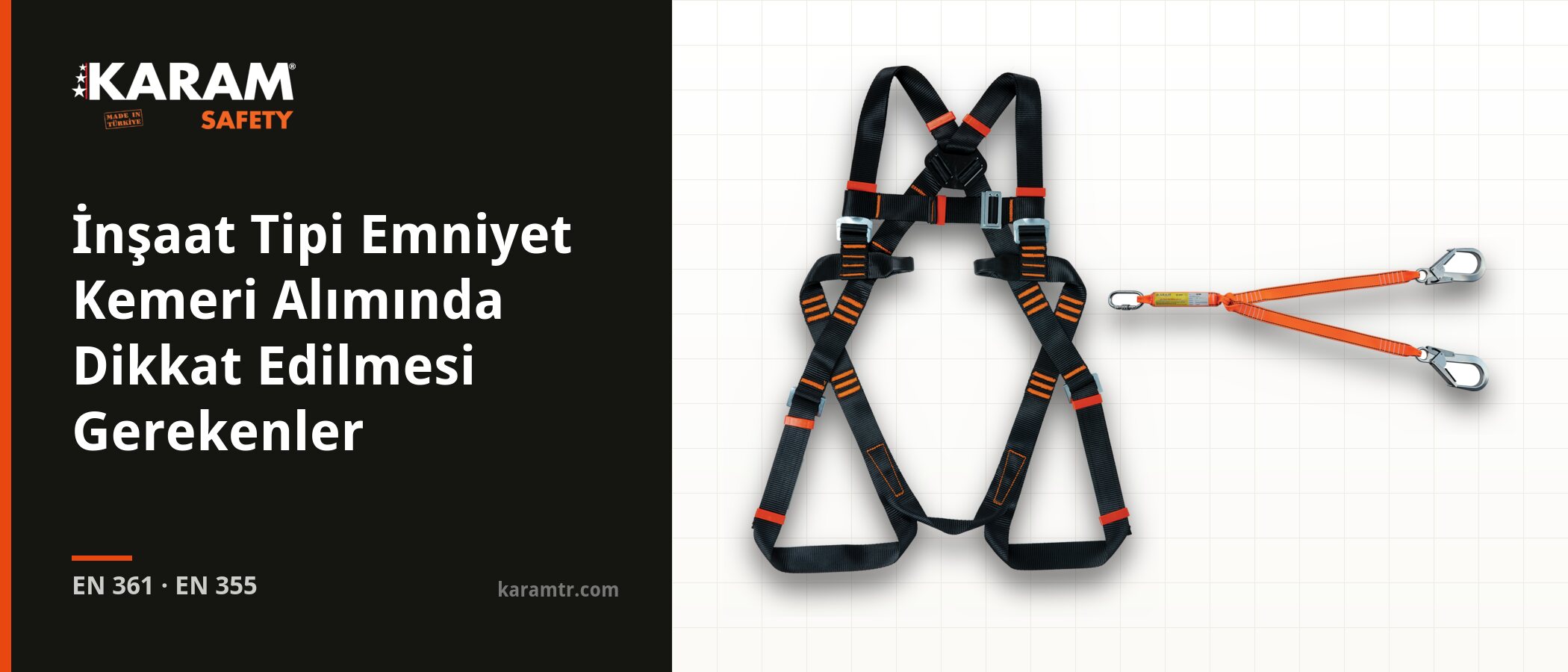
Sets can also be part of this calculation; kits that combine a harness with a twin-leg shock-absorbing lanyard reduce pairing errors. If you need different criteria for construction sites, see our article on buying construction safety harnesses.
Supplier evaluation criteria
Supplier evaluation scores bids not only on price but on the supplier's ability to support the product's life cycle inside your plant. The criteria below can be turned into an evaluation form and checked for each bid separately.
- Can they provide a current EU type-examination certificate and declaration of conformity for each model?
- Is there a user manual in the local language and a technical data sheet?
- Do labels clearly show the serial number, year of production and size?
- Can samples and a size chart be supplied for trial fitting?
- Can harnesses, lanyards, connectors and anchors be supplied as a compatible system?
- Do they offer technical support and training on periodic inspection, use and rescue?
- Can the same model and size be supplied consistently on repeat orders?
- Do they answer technical questions in writing and traceably?
To receive a model and document set proposal based on your task map and size list, contact the Karam team on WhatsApp.
Frequently Asked Questions
How many harness models should a factory use?
There is no fixed number; the task map decides. In many plants a three-family structure is enough: a single-point EN 361 harness for fall arrest only, an EN 361 + EN 358 harness for tasks that also need work positioning, and a harness that also meets EN 813 for prolonged suspended work. The fewer the models, the simpler training and inspection become.
How often should a safety harness be inspected?
According to Karam manuals, the user checks the harness before every use, and a periodic inspection is carried out by the manufacturer or a competent person at least every 12 months. Under heavy use the risk assessment may call for more frequent checks. The result, the next inspection date and the inspector's signature are entered on the equipment card.
Can harnesses be shared between workers?
The manuals require work-at-height equipment to be a personal issue item. A harness issued to one person stays in the right size and adjustment, and its usage history is known. Instead of a shared pool between shifts, issue by serial number to individuals is recommended. A separate, registered reserve can be kept for visitors or temporary staff.
Which documents should the purchasing file contain?
For each model: the EU type-examination certificate, EU declaration of conformity, user manual and, where available, the technical data sheet. In addition, the file should hold the technical specification, goods-in report, serial number list, issue forms, training records and periodic inspection records. Karam documents are available on the certificates page and on product pages.
Can a harness that has arrested a fall be reused after inspection?
No. According to Karam manuals, a product that has arrested a fall or taken a heavy shock load is withdrawn from service. Even without visible damage, webbing and stitching may have been overstressed. The product is not repaired; it is separated with a disposal report so it cannot return to the field, and the reason for withdrawal is recorded.
How should harness service life be tracked?
Service life is stated in the product's own user manual and may be shortened by the intensity and conditions of use. A product that has arrested a fall, been damaged or failed an inspection is withdrawn even if its service life has not ended. Keep the production date and date of first use as separate fields on the equipment card, issue stock as soon as practical and link life tracking to the periodic inspection schedule.
How do we get a quotation for a bulk harness order?
Pricing depends on model, quantity, size split and whether you choose sets. For the most accurate quotation, prepare your task list, preferred harness families and size split, and send them to the Karam team on WhatsApp. Requesting the matching document set with the quotation makes it easier to compare bids on the same criteria.
Is harness size chosen by user weight?
No. Size is selected by waist, leg and body height measurements and ensures the harness fits the body correctly. The user's mass including tools and equipment is compared separately with the load capacity stated in the documents for the harness and connectors. For example, the documents state a maximum rated load of 150 kg for KP45 and 125 kg for KP37.
Let our team recommend the best equipment for your needs and quote you quickly.